
Sport Personalities
Sport
CASSIUS CLAY (MUHAMMAD ALI)
- Charly W.Karl
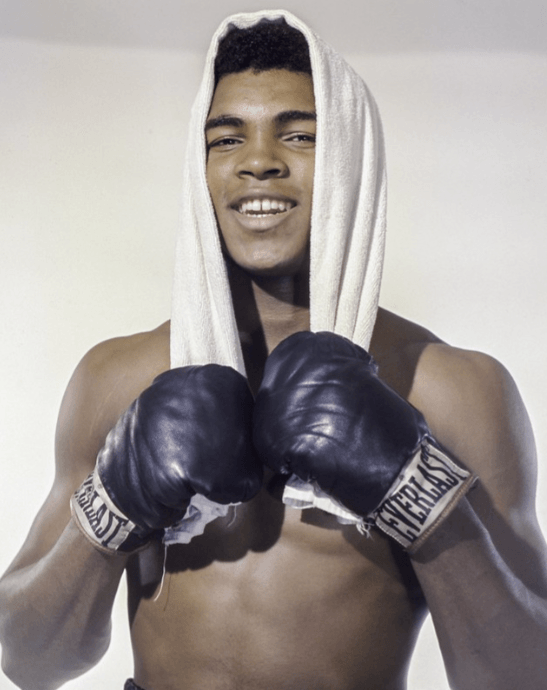
“I’ve tussled with a whale, injured a stone, hospitalised a brick. I’m so mean I make medicine sick, float like a butterfly, sting like a bee. I hated every minute of training but I said “Don’t Quit”. Suffer now and live the rest of your life as a champion. Don’t count the days, make the days count."
-
Brief Points of Interest
Cassius Marcellus Clay Jr. Entered the world in 1942 in Louisville, Kentucky, at a time when America’s promises were unevenly kept. He would leave it as Muhammad Ali, a name that reverberates across continents. The transformation from Cassius Clay to Muhammad Ali was not cosmetic; it was a declaration of ownership — of faith, of identity, of destiny. In that evolution lies the core of his greatness.
As a boy, Ali’s bicycle was stolen. Enraged, he told a police officer he wanted to beat up the thief. The officer, Joe Martin, suggested he first learn how to fight. That small redirection altered history. Clay trained with an urgency that bordered on obsession. His style defied convention: hands low, feet light, chin daringly exposed. He moved like a dancer in a heavyweight’s body, predicting rounds, taunting opponents, and dismantling them with startling speed.
At the 1960 Rome Olympics, he won gold in the light heavyweight division, returning home a hero. Yet segregation still shadowed his steps. Restaurants refused him service. The medal could not shield him from prejudice. Those contradictions hardened his resolve. In 1964, after defeating Sonny Liston to become heavyweight champion of the world, he announced his conversion to Islam and his new name, Muhammad Ali. It was an act of spiritual conviction and political defiance. He rejected what he called his “slave name,” insisting on self-definition in a nation uncomfortable with Black autonomy.
Ali’s refusal to be drafted into the Vietnam War marked the moral fulcrum of his life. He declared he had no quarrel with the Vietnamese and would not fight in a war that denied him full citizenship at home. The decision cost him his title, his boxing license, and nearly four years of his prime. Many condemned him. Others saw courage. History, with time’s long lens, recognised principle.
When Ali returned to the ring, he fought not only opponents but the erosion of time. The bouts against Joe Frazier and George Foreman became epics. In 1974, in Zaire, he staged the “Rumble in the Jungle,” absorbing Foreman’s power before unleashing his own. The rope-a-dope strategy was as psychological as it was physical — proof that intellect could outmaneuver brute force.
Beyond boxing, Ali’s influence stretched into the bloodstream of global consciousness. He was witty, theatrical, and unapologetically proud. He elevated the role of the athlete from performer to participant in public discourse. For African descendants worldwide, he embodied fearless Black identity. In Africa, he was welcomed not as visitor but as kin. In America, he forced a reckoning about race, war, and dignity.
Awards followed: Olympic gold, multiple world heavyweight titles, the Presidential Medal of Freedom in 2005. Yet his greatest accolade may be intangible — the courage he modelled. Diagnosed with Parkinson’s disease in the 1980s, Ali faced physical decline with the same grace that once animated his footwork. Lighting the Olympic flame in Atlanta in 1996, his trembling hand steadying the torch, he offered the world a final lesson in resilience.
Muhammad Ali was never merely a boxer. He was a poet of the ring, a provocateur of conscience, a humanitarian who travelled tirelessly for peace and charity. He proved that strength is not measured solely by punches thrown, but by stands taken. His life urges each generation to consider not only how to win, but what is worth fighting for.
Pelé

"Football is a game that transcends borders, bringing people together with a common goal. The real victory is not in lifting trophies, but in inspiring others to believe in themselves, to strive for greatness, and to play with passion."
-
Brief Points Of Interest
~ Pelé
In the pantheon of global football, Pelé remains unmatched—a monarch who ruled not with scepters or thrones but with a football at his feet. Born Edson Arantes do Nascimento in 1940 in the small Brazilian town of Três Corações, his ascent from a boy kicking rolled-up socks to the pinnacle of world football is the stuff of legend. Yet, Pelé’s story extends far beyond the confines of a football pitch; it is a tale of global unity, cultural transcendence, and a life dedicated to humanity.
Pelé’s brilliance burst onto the world stage at the 1958 FIFA World Cup in Sweden. At just 17, he scored six goals, including a hat-trick in the semi-final and two more in the final. Brazil lifted its first World Cup, and a star was born. To watch Pelé play was to witness poetry in motion—a blend of speed, skill, and instinct. He turned football into an art form, each movement a masterpiece. His 1,283 goals in 1,367 games remain an almost mythical achievement, etched in the annals of sporting history.
But Pelé was not merely a footballer; he was an ambassador. At a time when Brazil was grappling with political upheavals and poverty, Pelé became a unifying force. He embodied the spirit of *joga bonito*—the beautiful game—and showed the world that Brazil was more than its struggles; it was a land of immense talent and passion. His very presence elevated football into a global language, one that transcended borders, race, and class.
Pelé’s influence went beyond the game. As a Black athlete in a racially divided world, he became a symbol of resilience and possibility. His success challenged stereotypes and inspired millions, particularly in the Global South, where he was seen not just as a footballer but as a beacon of hope. He brought smiles to countries torn by war, playing in front of crowds that saw him as a symbol of peace and joy. In 1967, during Nigeria's civil war, a 48-hour ceasefire was declared so both sides could watch Pelé play—a testament to his unparalleled power to unite.
After hanging up his boots, Pelé used his platform to champion causes close to his heart. He worked tirelessly as a UNESCO Goodwill Ambassador, advocating for education and children’s rights. He believed in the transformative power of sport, not just as entertainment but as a tool for social change. His humility, despite his global fame, was a reminder that greatness is best measured by the lives one touches.
Pelé’s legacy is eternal. He was more than a footballer; he was a bridge between nations, a symbol of what humanity could achieve when driven by passion and purpose. He showed the world that football could be more than a game—it could be a force for unity, a medium for change, and a canvas for joy. Pelé will forever be the king, not just of football, but of hearts everywhere.
Tiger Woods
- KA Sports Photos

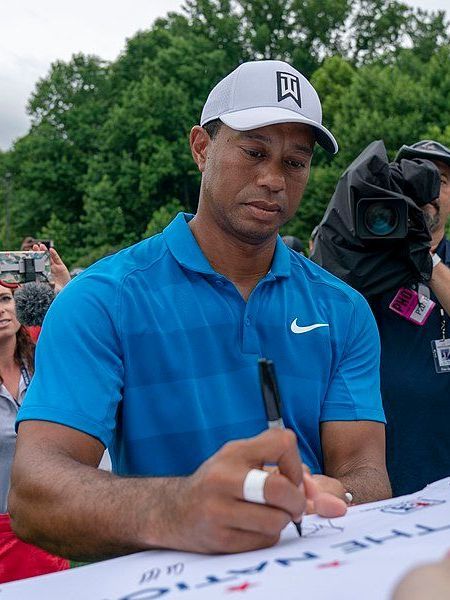
The greatest thing about tomorrow is, I will be better tomorrow than I currently am today, that’s how I look at my life. I will be a better golfer, person, father, husband and friend. Talent is something you’re born with and skills, you develop.
-
Brief Points of Interest
Undoubtedly one of the greatest and most famous golfers of all time. After 21 amateur victories, Tiger turned pro in 1996 aged 20yrs. At just 21yrs of age Tiger won and became the youngest Masters Champion at Augusta. In the same year 1997 Tiger won 3 PGA tour events.
A golf phenomenon who won 13 Major Championships between August 1999 and October 2010 whilst maintaining his world ranking number 1 spot for 545 weeks therein. Matter of fact, Woods would have been ranked Number 1 throughout the 11years but for 7 relaxed months between October 2004 and May 2005.
110 Professional Wins. 11 times PGA Player of The Year. He won the Byron Nelson Awards 8 times. Second only to Jack Nicklaus with 15 Major Golf Championships. Won 82 PGA Tour events. The youngest golfer and the 5th to achieve the Career Grand Slam. Tiger holds the exclusive distinctions of being second golfer, after the legendary Jack Nicklaus to have won The Grand Slam thrice. Honoured with a Presidential Medal of Freedom in 2019
Sadio Mané
- Екатерина Лаут, CC BY-SA 3.0
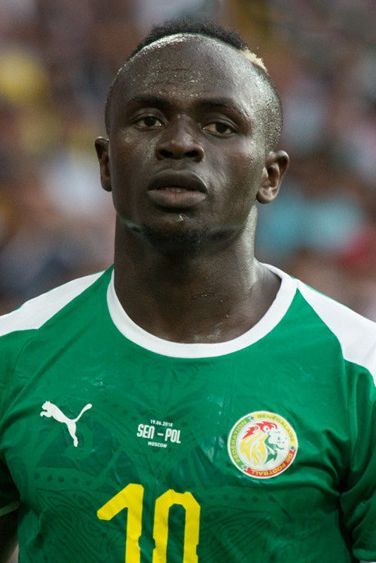
"Success in football, as in life, is not about individual glory, but about the collective effort of a team. The greatest victories are those shared with others, and true success is measured by how you lift others along the way."
-
Brief Points Of Interest
~ Sadio Mané
In the footballing world, where fame often becomes a gilded cage, Sadio Mané stands apart. Hailing from Bambali, a humble village in Senegal, Mané has become a symbol of excellence on the pitch and generosity off it. His journey is not just one of personal triumph; it is a testament to how talent, when combined with humility, can transform not just a life, but entire communities.
Mané’s rise to global stardom began in earnest with his exploits at FC Metz, Southampton, and Liverpool. At Liverpool, he formed a formidable partnership with Mohamed Salah and Roberto Firmino, crafting some of the most memorable moments in the club's history. His speed, precision, and unmatched work ethic were crucial in securing the UEFA Champions League title in 2019 and ending Liverpool’s 30-year Premier League drought in 2020. Yet, his brilliance was never solitary; Mané played for the team, not the limelight. Jurgen Klopp once called him “a complete player and a perfect human being,” a description that resonates both on and off the pitch.
But the story of Sadio Mané cannot be confined to statistics and trophies. For him, football was never the final destination—it was the means to a greater end. As his fame grew, so did his determination to uplift his people. Despite earning millions, Mané famously shuns extravagance. His explanation, both simple and profound, reflects his values: *“Why would I want ten Ferraris, twenty diamond watches, or two planes? What will these objects do for me and the world?”*
Mané’s philanthropy has become as legendary as his football skills. In Bambali, the village that nurtured his dreams, he has built schools, a hospital, and a community center. For a place where electricity and healthcare were once luxuries, Mané’s contributions are nothing short of transformative. His projects are not acts of charity but investments in his people’s potential. He doesn’t just give back; he empowers.
His work extends beyond Bambali to Africa at large. Mané has been a vocal advocate for the continent, urging the world to see Africa not as a land of need but as a reservoir of talent and innovation. He has inspired countless young Africans to dream beyond their circumstances, proving that greatness can emerge from even the most modest beginnings.
In 2022, he led Senegal to their first Africa Cup of Nations victory, scoring the decisive penalty in the final against Egypt. It was a moment of unbridled joy for Senegal—a nation united by Mané’s relentless pursuit of excellence. Beyond the goals and accolades, he became a symbol of hope, demonstrating that perseverance and integrity can conquer even the highest peaks.
Mané’s story is not just about football; it is about humanity. He reminds us that success is hollow if it does not lift others. In a world increasingly divided by wealth and privilege, Sadio Mané is a beacon of what is possible when talent serves a purpose greater than itself. His legacy, like his game, is not about flash but about impact—a legacy that inspires not just Senegal, but all of Africa.
George Weah
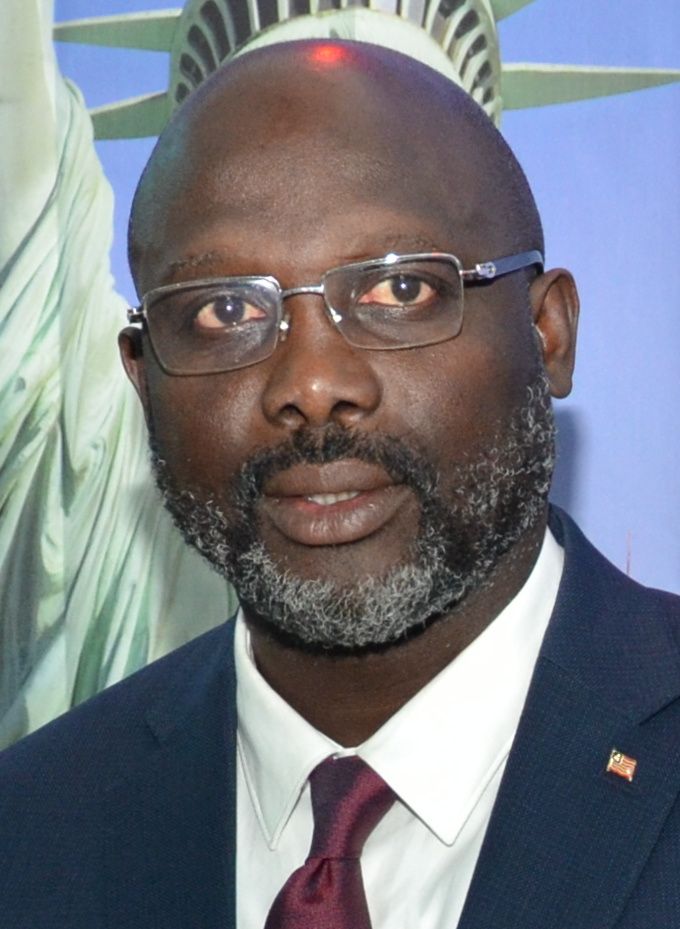
"Success in life is not about personal accolades, but about lifting others from despair and providing them with the tools to succeed. As leaders, we are tasked with creating opportunities that allow our people to dream, to aspire, and to achieve."
-
Brief Points of Interest
~ George Weah
George Weah’s story unfolds like an epic—a tale of talent, determination, and an unyielding commitment to his people. Born in the slums of Clara Town, Monrovia, in 1966, Weah's beginnings were modest, his life shaped by the rhythms of struggle and survival. Yet, in those narrow streets, where football was both a game and an escape, a dream was born that would catapult him to global stardom, political prominence, and Pan-African advocacy.
Weah’s football journey began on dirt fields, where his raw talent earned him the moniker “King George.” He was scouted by Arsène Wenger, who brought him to Europe in 1988, marking the start of a career that would redefine African representation in global football. Weah played with unmatched elegance—powerful, swift, and visionary. From AS Monaco to Paris Saint-Germain and AC Milan, he dazzled, collecting accolades that crowned him the first and only African to win the Ballon d’Or in 1995.
But Weah’s achievements transcended trophies. On the pitch, he shattered stereotypes, proving that African players could dominate the world stage. He carried the hopes of a continent, inspiring young Africans to see football as a gateway to global recognition. His charisma made him more than an athlete; he became a symbol of African excellence, someone who showed that roots in hardship could blossom into greatness.
Off the field, Weah’s humanity shone just as brightly. As Liberia descended into civil war in the 1990s, Weah used his platform to advocate for peace. While others distanced themselves from the conflict, he became an unwavering voice for his people, channeling his resources to provide aid to those displaced by violence. His philanthropy extended to scholarships, hospitals, and community projects—a testament to his belief that success meant nothing if it did not uplift others.
In 2018, Weah made an unprecedented leap from football to politics, becoming Liberia’s president. His campaign was a grassroots movement, rooted in the struggles of the common Liberian. Critics questioned his inexperience, but his vision was clear: to rebuild a nation scarred by war and poverty. Weah tackled issues of education, youth empowerment, and economic reform, embodying the same tenacity he once showed on the football field. His leadership, though not without challenges, remains deeply tied to his desire to elevate Liberia and inspire a new era of African leadership.
Weah’s influence extends beyond Liberia’s borders. As a Pan-Africanist, he champions African unity and self-reliance, often emphasizing that the continent’s greatest resource is its people. His journey is a reminder of the interconnectedness of African struggles and triumphs. To him, every goal scored, every policy implemented, and every humanitarian effort undertaken is part of a larger mission to showcase Africa’s resilience and potential.
George Weah is not merely a footballer turned politician; he is a bridge between worlds, a testament to the boundless possibilities of the African spirit. His life encapsulates the ethos of Pan-Africanism—a commitment to lifting the continent and its people, not through grand speeches, but through tangible acts of hope and transformation. In George Weah, Africa finds not just a hero, but a champion of its aspirations.
Sir Lewis Hamilton
- flikr.com/photos
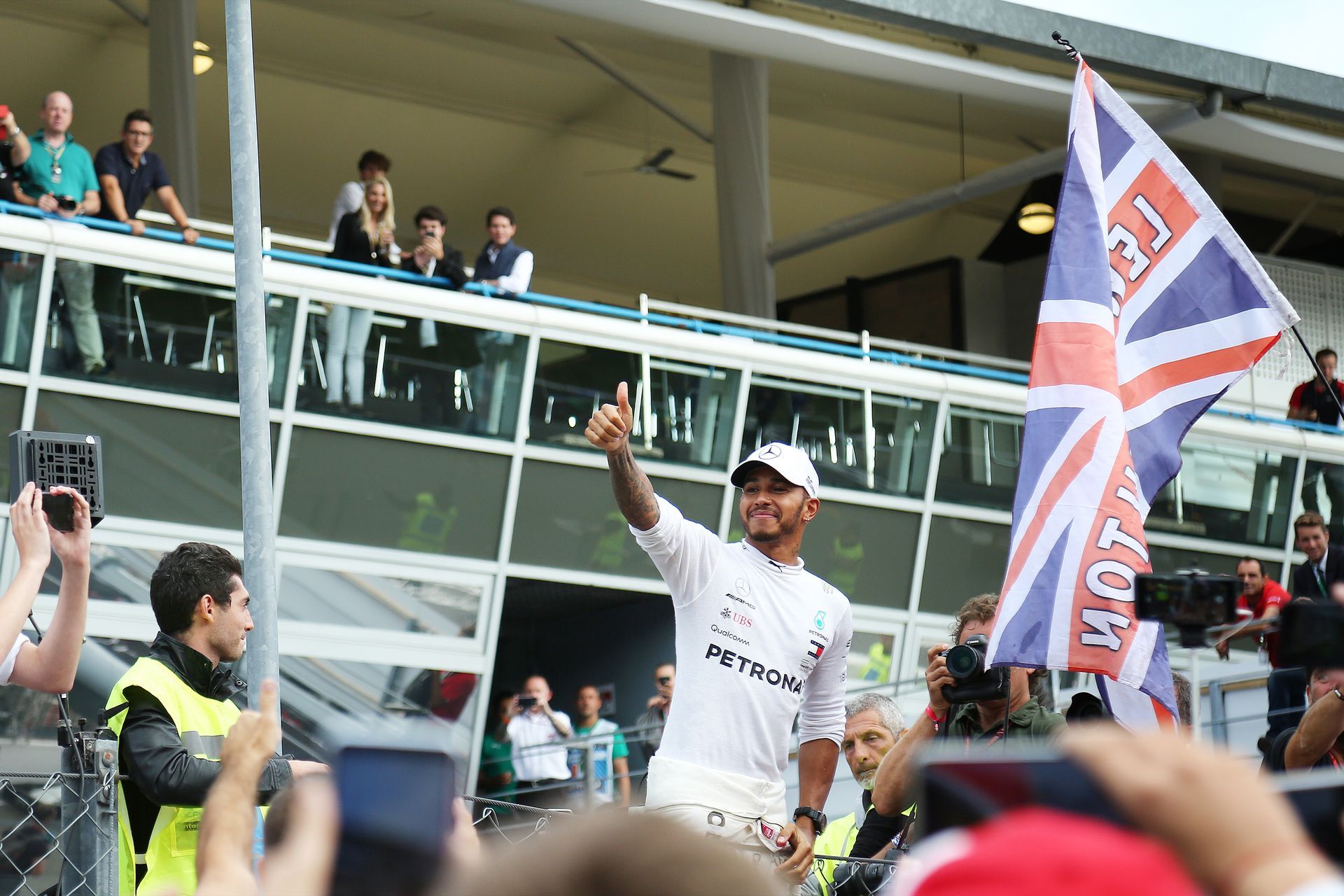
"To be the best, you must push beyond your limits, not just for yourself but for others. The track is a metaphor for life—it’s about perseverance, determination, and a refusal to accept anything less than greatness.”
-
Brief Points Of Interest
~ Sir Lewis Hamilton
Sir Lewis Hamilton is not just a name synonymous with victory in Formula 1; it is a beacon of resilience, activism, and redefined excellence. Born in 1985 in Stevenage, England, Hamilton’s journey from the son of an immigrant father to the most successful driver in Formula 1 history is a story that transcends the racetrack. His seven World Championships and numerous accolades in motorsport make him a global legend, but it is his unwavering commitment to use his platform for social change that sets him apart as an icon.
In a sport long dominated by elite, white Europeans, Hamilton entered Formula 1 as a young, mixed-race driver in a world that was not prepared for someone like him. He not only conquered the track with unmatched speed and precision, but he also dismantled the barriers that often confined athletes to the periphery of larger conversations. His achievements on the track are unparalleled, yet it is his courage to speak out against racial injustice and inequality that defines him as a modern-day leader.
Hamilton’s candidness about the challenges he faced growing up in a sport that was predominantly white and affluent is a powerful statement about resilience. His ascent to the top of Formula 1 was a triumph against the odds—against prejudice, exclusion, and the notion that success was reserved for a particular race or class. He became a symbol of possibility, particularly for Black youth, showing them that greatness was not bound by circumstance.
Beyond his motorsport achievements, Hamilton has emerged as one of the most outspoken advocates for racial justice. His activism, deeply rooted in the Black Lives Matter movement, has seen him challenge the structures of power both within and outside of the sport. He has used his status to highlight the lack of diversity in motorsport, establishing the Hamilton Commission to create pathways for marginalized communities to enter the industry. Hamilton has also called out racism within the sport, demanding accountability from those in positions of power.
Yet his activism does not end with racial justice. Hamilton has dedicated himself to environmental causes as well. His public embrace of a vegan lifestyle, along with his efforts to promote sustainable practices within the sport, underscores his commitment to a healthier planet.
Sir Lewis Hamilton is much more than a Formula 1 champion. He is a voice for change, a tireless advocate for inclusivity, and a man who believes that sport can be a powerful tool for social transformation. His legacy is one of excellence, not only in racing but in reshaping the very fabric of society. Through his triumphs on the track and his activism off it, he remains an African icon whose influence extends far beyond the boundaries of motorsport.
Gareth Southgate
- Антон Зайцев, CC BY-SA 3.0 GFDL, via Wikimedia Commons
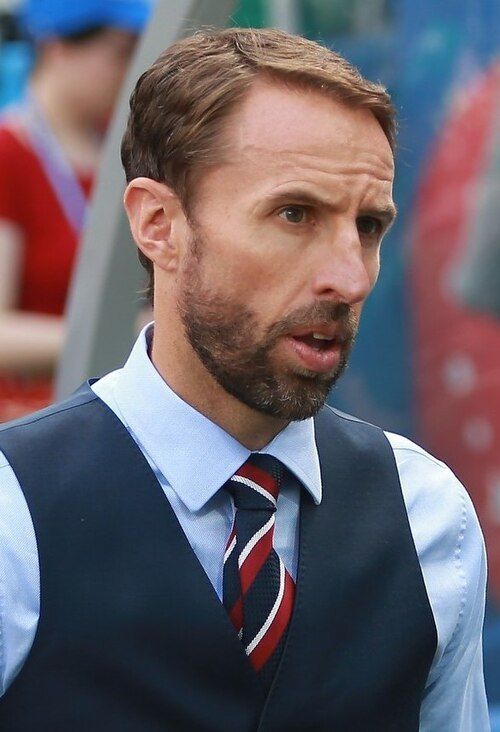
“I’ve never listened to criticism or praise too much. I stay level-headed. What matters is to lead the team with integrity and courage.”
-
Brief Points Of Interest
~ GARETH SOUTHGATE
In a sport drunk on noise, Gareth Southgate is a man of still waters. He never needed to raise his voice to command a room, nor pound his chest to declare conviction. Whether standing solemn on the Wembley touchline or comforting a player with a father’s hand, Southgate has always led with something rarer than brilliance—he led with character.
Before he became England’s men’s team manager in 2016, he had already quietly achieved success—leading England’s U21 team to victory in the 2016 Toulon Tournament, nurturing talents who would later become pillars of the senior squad. His promotion was cautious at first, seen as a stop-gap. Few could have guessed he would soon become England’s most unifying football figure in generations.
He guided England to a series of deep, unprecedented tournament runs:
Ø 2018 FIFA World Cup Semi-Finalist (ending a 28-year drought)
Ø 2018–19 UEFA Nations League – 3rd Place Finish
Ø Euro 2020 Finalist – England’s first major final since 1966
Ø 2022 FIFA World Cup Quarter-Finalist
Ø 2024 UEFA Euro Finalist, just months ago
Ø And now, firmly seated in history, Southgate was knighted by King Charles III in 2024, for services not only to sport but to national dignity.
Under his leadership, England didn’t just evolve tactically—they evolved morally. He fielded a younger, more ethnically diverse team, mirroring modern Britain. When Marcus Rashford, Bukayo Saka, and Jadon Sancho faced racial abuse after missing penalties at Euro 2020, Southgate didn’t hedge. “They are part of this England family,” he said. “We stand by them.”
Two years later, in a poetic rebuke to bigotry, he entrusted those same players—and more—to take penalties again. They all scored. The message was clear: in Southgate’s England, grace follows failure, and courage is cultivated.
While silverware has narrowly eluded him, Southgate’s deeper victory lies in what he has redefined. Englishness is no longer just grit and guile—it is grace, inclusivity, and vision. The country has not seen just a manager in him, but a cultural steward.
“We have been a beacon of light in bringing people together,” he once said.
Indeed. Gareth Southgate has done more than manage a football team. He has authored a new chapter in the English game—one where leadership is measured not by how loudly one speaks, but how deeply one listens, and how boldly one believes.
ROGER FEDERER
- Tatiana from Moscow, Russia
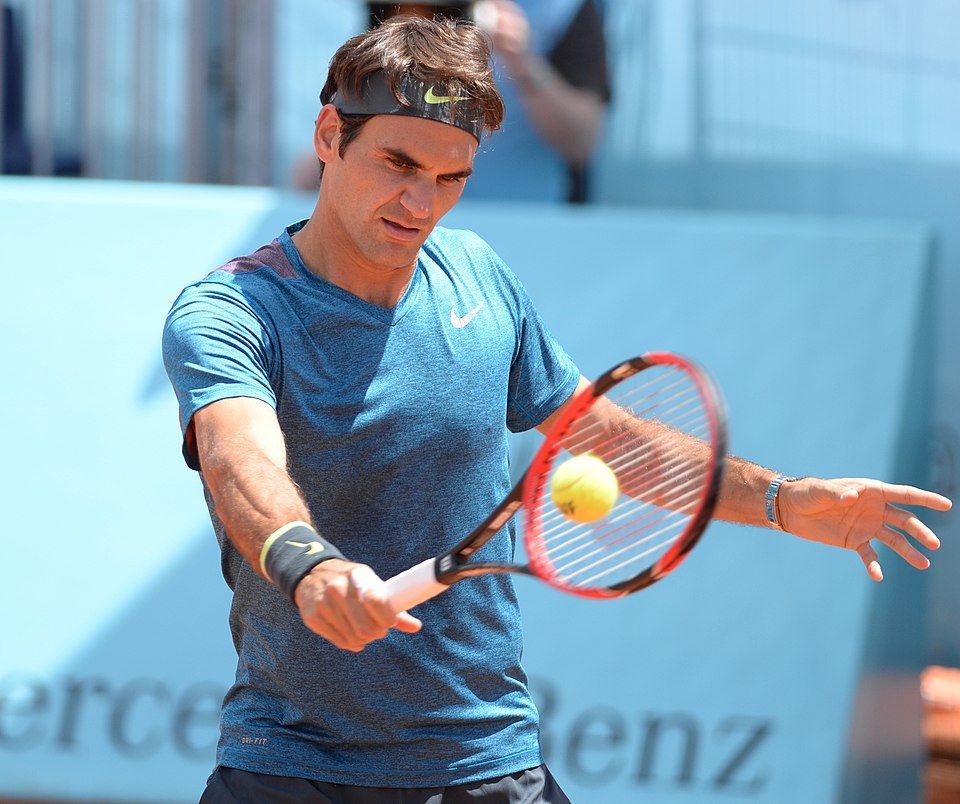
“Education is the most empowering force in the world. It creates knowledge, builds confidence, and breaks down barriers to opportunity.”
-
Brief Points Of Interest
- ROGER FEDERER
There are athletes who win, and then there are those who redefine what winning means. Roger Federer belonged to the latter. For over two decades, he didn’t just dominate the game of tennis—he elevated it, turned it into ballet, made it something you didn’t just watch but felt.
Born in Basel, Switzerland in 1981, Federer came into the world with calm precision, but it was his mother—Lynette, a South African—who unknowingly connected him to a continent that would later shape his global mission.
His tennis career reads like a myth: 20 Grand Slam titles, 103 ATP titles, 310 weeks as World No. 1—237 of them consecutively. And yet, Federer was never just the numbers. It was the way he moved, the fluid elegance of his one-handed backhand, the restraint in his triumph, the grace in his losses. He showed that dominance could wear a smile, and that greatness didn’t need noise to echo.
But it is his off-court work that lifts him from champion to icon.
In 2003, at the height of his powers, Federer established the ‘Roger Federer Foundation’, inspired by his mother’s South African roots and his belief in the transformative power of education. The foundation focuses on improving access to quality early learning for children in Southern Africa and Switzerland. As of 2024, it has reached over 2.4 million children, with sustainable education initiatives across Malawi, Namibia, Zambia, Zimbabwe, South Africa, Botswana, and Lesotho.
Federer has walked this talk—not as a figurehead, but as an involved philanthropist. From visiting classrooms in Malawi to advocating for early childhood education at global forums, he has humanized his status. He didn’t simply sign cheques; he showed up, listened, learned.
In Africa, Federer’s legacy extends beyond tennis courts and into communities—training teachers, building infrastructure, giving children a fairer start. While others built stadiums in their name, he quietly built futures.
His retirement in 2022 marked the end of an era, but not of his impact. In many African villages, the name Federer is whispered not for Grand Slams, but for classrooms, libraries, and the warmth of possibility.
Graceful in play, generous in spirit, Roger Federer reminds us that the truest measure of an icon lies not in their trophies, but in the lives they uplift long after the applause has faded.
CRISTIANO RONALDO
- Anish Morarji from St Albans, England
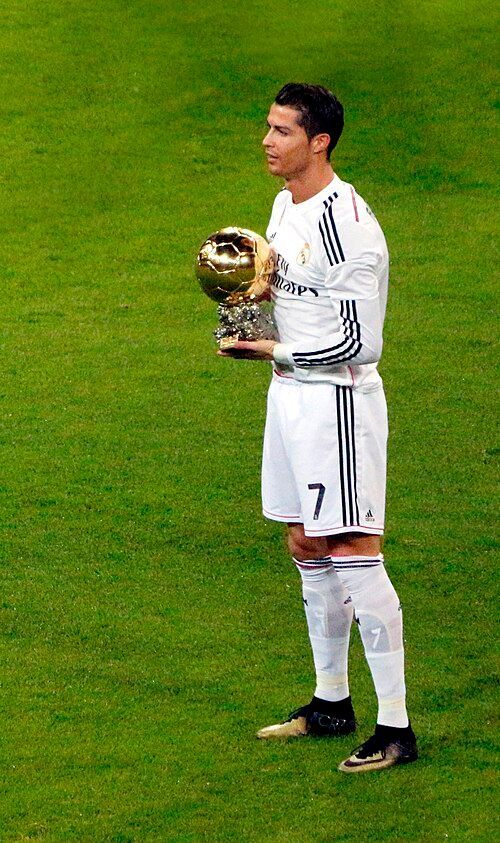
“We should make the most of life, enjoy it because that’s the way it is.”
-
Brief Points Of Interest
~ CRISTIANO RONALDO
There is something almost mythic about the way Cristiano Ronaldo moves — not just on the pitch, but through life. The boy from Madeira, who sold fish with his father and dreamt on narrow streets, has become one of the most recognizable faces on the planet. But it is not merely the goals — over 800 of them — nor the trophies, nor even the carefully sculpted physique that marks him out as an icon. It is, rather, his philosophy of discipline, his relentless pursuit of excellence, and the quiet but profound ways in which he has sought to give back to humanity — including Africa.
To speak of Cristiano is to speak of a force of will. At Manchester United, he turned talent into thunder. At Real Madrid, he became a legend. At Juventus, he defied age. And now, even as twilight hovers gently over his career, he wears the armband with the dignity of a man who knows what it took to become not just great, but generational.
Yet beyond the limelight, Ronaldo’s heart beats in quieter rhythms. In 2014, he made a contribution toward the building of what would become Africa’s largest children’s hospital in Eldoret, Kenya — a gesture not trumpeted, but telling. And through his foundation, he has touched 22 African nations, targeting 8,500 scholarships and jobs for underprivileged youth. It is easy to marvel at his medals, but these are the legacies that endure long after the final whistle.
In an age where celebrity often masquerades as significance, Ronaldo’s quiet consistency in philanthropy reminds us that one can be both a spectacle and a servant. His global ambassadorial roles with Save the Children, UNICEF, and World Vision reflect a man who refuses to be confined by the stadium’s touchline.
To many young Africans — and indeed, youth across the globe — Ronaldo is not just a footballer. He is a symbol of how brilliance can rise from modest beginnings, how hunger can be harnessed into purpose, and how success should carry a social conscience. That he has done all this while never forgetting his origins makes him not only an icon of sport but of humanity.
He once said, “We should make the most of life, enjoy it because that’s the way it is.” But he has done more than enjoy life — he has elevated it, for himself and for others.
In Africa, his footprint is not just in fans’ hearts, but in the hope he has helped nurture — a legacy beyond goals.
LIONEL MESSI
- Fanny Schertzer
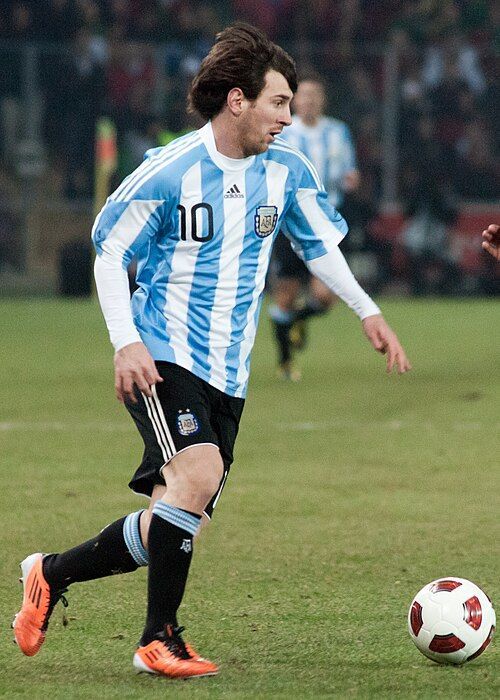
“You have to fight to reach your dream. You have to sacrifice and work hard for it.”
-
Brief Points Of Interest
- LIONEL MESSI
The boy from Rosario, Argentina, who once needed hormone treatments just to grow, would one day rise into football’s pantheon not by force, but by grace—dancing through defenders as though waltzing through fog. Lionel Messi has never been a man of theatrics or volume. His voice is soft, his posture almost self-effacing, yet his feet speak in poetry and his deeds echo across continents—including the Motherland.
Messi’s story is not just one of goals scored and trophies lifted, though those are plenty. He is a record-breaker, a seven-time Ballon d’Or winner, and a FIFA World Cup champion. But far beyond the pitch, Lionel Messi wears a quieter, nobler jersey—that of a global philanthropist. His impact on Africa, though not often headline-grabbing, pulses like a quiet stream watering dry roots.
Through the Leo Messi Foundation, established in 2007, he has chosen to shine his light where the world too often forgets to look. In 2019, his foundation partnered with UNICEF to bring clean water and food access to over 2,000 people in Kenya. Where wells had dried and children walked hours for a drop of life, Messi brought the lifeblood of sustenance—with no cameras trailing behind.
The foundation’s reach extends to critical health interventions and educational projects around the world, with many silent seeds sown in African soil. Messi, serving as a UNICEF Goodwill Ambassador, lends his presence and platform to champion children’s rights. In that role, he has stood for the African child—not with applause-seeking gestures but through sustained action and focused empathy.
It is easy to be dazzled by Messi the magician. But Messi the man is where iconography lies. His dedication to children’s health, education, and equality reveals a deeper philosophy: that greatness must bend its back to lift others.
“You have to fight to reach your dream. You have to sacrifice and work hard for it,” he once said. But Messi’s sacrifice transcended personal struggle. He now fights for others to dream—children in Nairobi, students in Dakar, families in rural communities where football may be worshipped, but clean water remains a prayer.
In the end, Lionel Messi teaches us something deeper than footwork. That humility is not weakness, that greatness is not noise, and that to leave the world a little more tender, a little more just, is the most profound victory of all.
RONALDO R9
- Alex Carvalho from Rio de Janeiro, Brasil
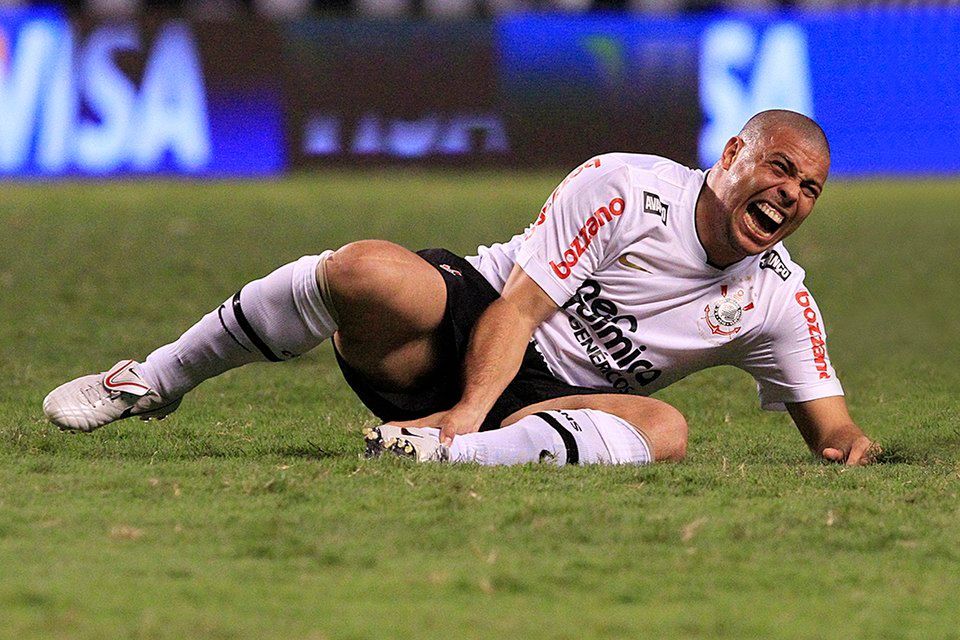
“There’s no greater pain than not being able to do what you love.”
-
Brief Points Of Interest
~ RONALDO R9
There are names that echo with medals and others that echo with meaning. Ronaldo Nazário—known simply and majestically as R9—belongs to both worlds. In an era of great strikers, he emerged as something elemental. Not just a footballer, but a force of nature who dribbled past despair as elegantly as he danced past defenders.
Born into poverty in Bento Ribeiro, a working-class neighborhood in Rio de Janeiro, Ronaldo’s story was never merely about talent—it was about triumph over what should have broken him. A school dropout by 11, he found his grammar in football, and in the chaos of favelas, he wrote poetry with his feet. By 17, he was playing for Brazil. By 20, he was the most feared forward in the world.
Ronaldo’s rise was meteoric. He won two Ballon d’Ors, two World Cups (1994, 2002), and dazzled at clubs like Barcelona, Inter Milan, and Real Madrid. His movements—fluid yet fierce—defied geometry. Defenders stumbled over their own shadows, goalkeepers guessed in vain. His speed was merciless, his finishes clinical. They called him *O Fenômeno*—The Phenomenon—and the name fit like a prophecy fulfilled.
But to understand R9’s iconography, one must also confront his injuries. Devastating knee ruptures in 1999 and again in 2000 should have ended his career. For two years, the world watched a god brought low, a talent seemingly erased. Yet, in one of football’s greatest resurrections, Ronaldo returned in 2002 to lead Brazil to World Cup glory—scoring eight goals, including two in the final. He did not just win a trophy; he redefined human resilience.
His impact stretched far beyond the pitch. In Africa, he inspired generations—from the crowded fields of Kinshasa to the sunburnt schoolyards of Kampala. Children copied his buzzcut, his step-overs, his smile. Through his work with the United Nations and countless NGOs, he supported HIV/AIDS awareness campaigns, youth empowerment, and education drives across Africa and Latin America. In 2011, he was appointed a Goodwill Ambassador for the United Nations Development Programme.
Ronaldo once said, “There’s no greater pain than not being able to do what you love.” That ache, endured and conquered, became his legacy. His story became less about the goals and more about the comeback. Less about records and more about redemption.
Today, R9 is not just remembered—he is revered. As an executive and club owner, he mentors future stars, emphasizing not only excellence but empathy. His journey—scarred yet sacred—reminds us that greatness is not about perfection. It is about surviving storms and still choosing to run toward the light.
RONALDINHO
- abdallahh
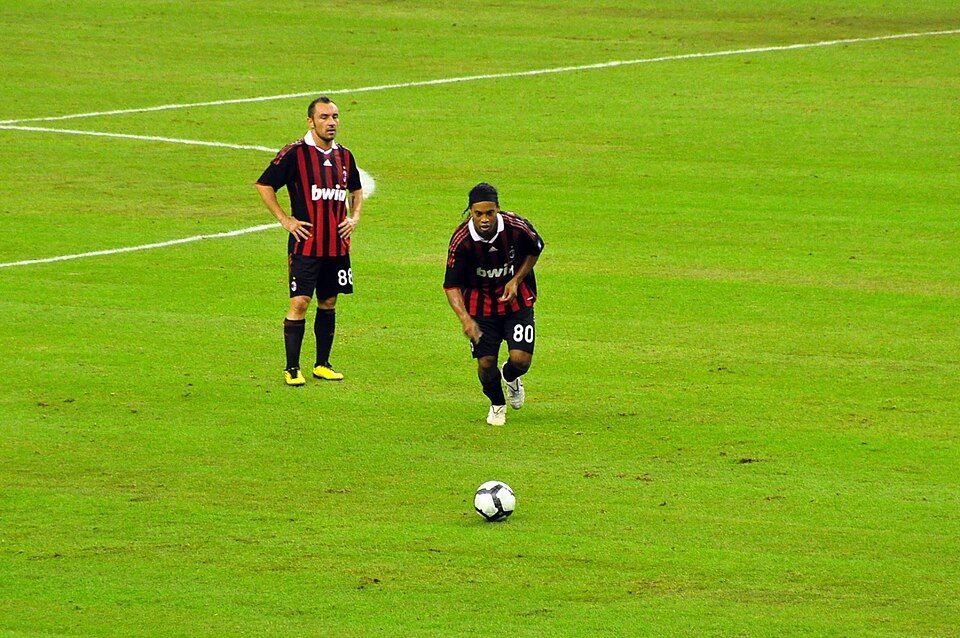
“I learned all about life with a ball at my feet.”
-
Brief Points Of Interest
- RONALDINHO
There are athletes who win titles, and there are those who win hearts. Ronaldinho—born Ronaldo de Assis Moreira—did both, but he will be remembered for something even rarer: he taught the world to smile again.
Born in Porto Alegre, Brazil, Ronaldinho’s journey began not in glittering stadiums, but in dusty streets where football was both escape and expression. He moved not like an athlete chasing points, but like a child dancing through dreams. At his feet, the ball became enchanted. Nutmegs, no-look passes, elasticos—he didn’t just play the game, he made it a celebration of possibility.
As a footballer, Ronaldinho’s resume is gilded with glory. A World Cup winner in 2002. A Ballon d’Or recipient in 2005. A UEFA Champions League title with Barcelona. League titles, domestic cups, countless awards. But numbers never truly captured his essence. For fans across Africa, Latin America, and beyond, Ronaldinho was more than a player—he was a poet of joy in an often unjust world.
Africa embraced him not just because of his samba-footed genius, but because of how he reflected our communal soul. In Mali, boys painted his name on the backs of their shirts; in Nigeria, bootleg DVDs of his Barcelona highlights became street currency. He visited the continent often—smiling with children in Accra, supporting youth football initiatives in Dakar, and championing causes tied to education and opportunity.
A believer in unity through sport, Ronaldinho once said, “I learned all about life with a ball at my feet.” That lesson—imbued with humility—was his gift to the world. He never forgot his roots. Raised in a modest home, he remained deeply connected to community efforts in Brazil’s favelas and worked with organizations across the Global South to promote sports as a tool for peace and social mobility.
In Africa, his philanthropic footprints have supported efforts in Angola and Mozambique, where football academies partnered with health and literacy campaigns. His presence wasn’t performative—it was participatory. The boy who once played barefoot under streetlamps became a man who lit lamps for others.
Even in his retirement, Ronaldinho’s influence is more relevant than ever. His name evokes not just nostalgia, but a yearning for purity in sport and life—where joy is not sacrificed at the altar of profit, and where grace is a higher form of power.
Ronaldinho didn’t just win matches—he won souls. And in doing so, he became not merely a footballing legend, but a cultural and human icon whose spirit danced far beyond the touchline.
THIERY HENRY
- Ronnie Macdonald from Chelmsford and Largs, United Kingdom
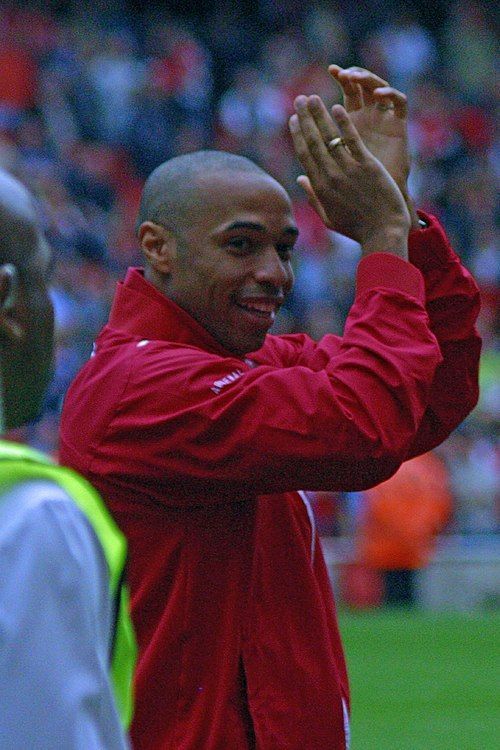
“We need to stand together to fight racism and discrimination in all forms.”
-
Brief Points Of Interest
~ THIERY HENRY
In the quiet language of football, Thierry Henry wrote sonnets with his feet. Born in the Parisian suburb of Les Ulis, where concrete fields doubled as canvases, Henry was never just destined for the ordinary. His gait was graceful, his finishes surgical, and yet what truly elevated him into the realm of icons was the conviction that the game—and the world—could be better, fairer.
Long before kneeling became a protest, and before footballers felt permitted to have political voices, Henry spoke in the language of resistance. He used his stardom not as a shield from the world’s complexities, but as a spotlight to illuminate them. On the pitch, he became Arsenal’s all-time leading scorer, a World Cup winner with France in 1998, and a UEFA Champions League victor with Barcelona in 2009. But off the pitch, his heart beat fiercely for equity—for the voiceless, the targeted, and the marginalized.
In Africa, Henry is not just adored for the trophies and transcendent skill. He is embraced for his soul. In his post-playing career, he has actively spoken against racism, in all its insidious forms. “We need to stand together to fight racism and discrimination in all forms,” he once declared—not as a PR-crafted soundbite, but as a mission statement. He stepped down from social media, protesting tech platforms’ silence on racial abuse. It was a quiet act with seismic echoes, especially across African nations where the diaspora draws strength from such acts of solidarity.
Henry’s relationship with Africa is not ornamental; it is rooted. As a global ambassador for peace and equality, he has collaborated with initiatives that amplify education, youth empowerment, and equal opportunity. His heritage—Antillean, Guadeloupean—binds him to the broader Afro-Caribbean and African identity, and he wears it with quiet dignity. Across cities from Dakar to Nairobi, his name is whispered not just in footballing reverence but in civic admiration.
His punditry, sharp and reflective, often veers toward the philosophical. In those moments, Henry becomes more than a football sage; he becomes a moral compass in a sport that too often turns its back on truth. He speaks of identity, of belonging, of the urgent need for systemic reform. Not just in football—but in society itself.
In a world eager to celebrate fleeting fame, Thierry Henry offers something rarer: a legacy tethered to both excellence and ethics. He is the kind of icon who doesn’t just play the beautiful game—but insists the world around it must be beautiful, too.
JAY JAY OKOCHA
- Кирилл Венедиктов
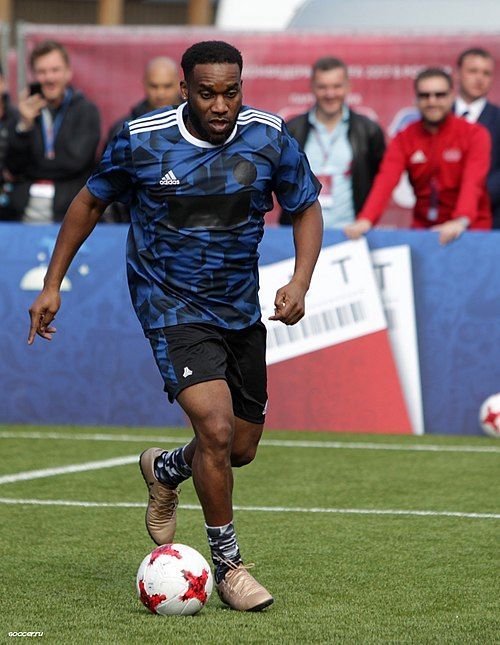
“As long as the fans are happy, I am happy.”
-
Brief Points Of Interest
- JAY JAY OKOCHA
To watch Jay Jay Okocha play football was to witness an artist refusing to colour within the lines. He was not merely a footballer—he was a conjurer of joy, a rebel with a ball who turned resistance into rhythm, and play into poetry. He danced on the edge of gravity, his feet flirting with the earth like a master of ceremonies teasing a mesmerized crowd.
Born in Enugu, Nigeria, in 1973, Augustine Azuka Okocha grew up in a family where football was not a profession—it was a pastime. But young Jay Jay played as though he had something urgent to say. He would later joke that he “was so good they named him twice,” but beneath the quip lay truth: he was that good. In a country brimming with talent, he stood apart, not just for his skill, but for the sheer audacity of it.
When Nigeria burst onto the global football scene in the 1990s, Okocha became its beating heart. He dazzled for the Super Eagles in multiple African Cup of Nations (AFCON) tournaments and starred at three World Cups. But it was the 1996 Atlanta Olympics that immortalized him. Nigeria, against all odds, clinched the gold medal in football—defeating Brazil and Argentina. Okocha wasn’t just part of the squad; he was its spirit animal, orchestrating movement, unlocking defences, whispering freedom into every touch of the ball.
Club football brought him to Europe—Eintracht Frankfurt, Fenerbahçe, Paris Saint-Germain, and Bolton Wanderers. In England, he wasn’t just a Nigerian superstar—he was a revelation. Fans of all backgrounds adored him. At Bolton, a modest club, he was royalty. As captain, he led by flair, not just fire, making defenders dizzy and supporters euphoric.
But Jay Jay Okocha’s legacy is more than highlight reels. It is in how he made African football beautiful and respected. He challenged a global gaze that often saw African players as athletes, not artists. He was proof that the continent had imagination, intelligence, and elegance to offer the world.
Through his post-retirement initiatives—including sports development programs and mentorship of Nigerian youth—he remains a force for good. He has supported causes related to education and talent development across West Africa. A beacon to many, he made it clear that football could be a tool for self-discovery and societal healing.
Okocha once said: “As long as the fans are happy, I am happy.” But it was more than entertainment. It was empowerment. In his dribbles, millions found courage. In his smile, they found themselves.
Jay Jay Okocha didn’t just play football. He played hope.
MIKE TYSON
- Eduardo Merille
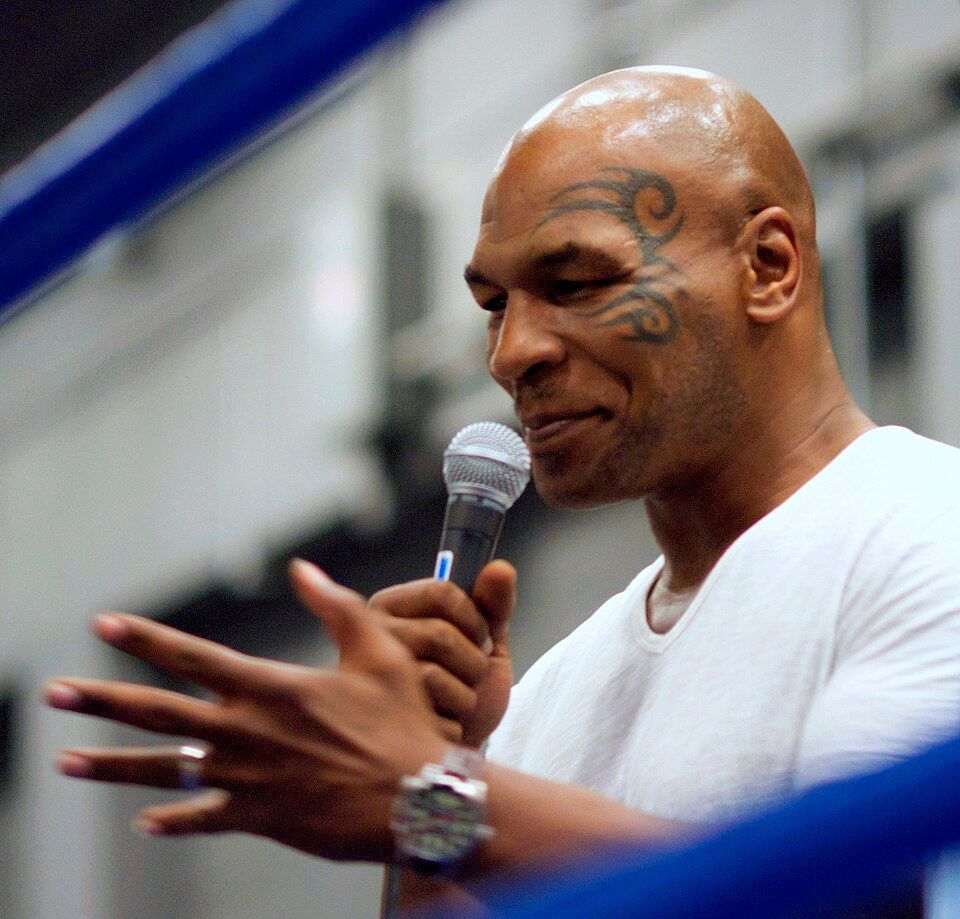
“Everyone has a plan until they get punched in the mouth.”
-
Brief Points Of Interest
~ MIKE TYSON
It begins not in the roaring arenas of Las Vegas, but in the raw streets of Brownsville, Brooklyn — where a boy named Michael Gerard Tyson grew up wrestling poverty, violence, and the aching absence of stability. Before the world called him “Iron Mike,” he was a silent, lisping child with a pet pigeon and a volcanic rage that needed somewhere to go. The ring found him — or perhaps he found it — and history changed course.
At just 20 years old, Tyson became the *youngest heavyweight champion in history*, a record that still holds. He wasn’t merely winning; he was obliterating. With fists like detonations and a peek-a-boo style sculpted by the legendary Cus D’Amato, Tyson didn’t fight — he dominated. His unification of the WBA, WBC, and IBF titles wasn’t just a boxing feat; it was a cultural earthquake. He became a symbol — of fear, of black power, of controlled chaos.
But symbols are fragile. And Mike, for all his invincibility in the ring, was a deeply wounded man. After D’Amato’s death, the protective scaffolding around him collapsed. Fame turned feral. The world watched, hungry and gleeful, as Tyson spiraled — a stunning defeat by Buster Douglas, a tumultuous marriage with actress Robin Givens, allegations of abuse, and then a prison sentence for rape in 1992 that irrevocably changed public perception.
What followed was less a comeback than a slow, tortured reckoning. Tyson returned to the ring and regained some titles, but the chaos had metastasized. There was the surreal ear-biting incident with Holyfield in 1997, a ban, lawsuits, bankruptcy. He became a punchline. A cautionary tale.
And yet — he endured.
What redeems Tyson is not his ring record, though that remains impressive: *50 wins, 6 losses, 44 knockouts*. It is his willingness to confront his brokenness publicly. Through documentaries, his one-man Broadway show, and vulnerable interviews, Tyson has pulled back the curtain on trauma, addiction, and the cost of being weaponized so young. He’s evolved — into an advocate for mental health, a cannabis entrepreneur, a father, and a man, finally, at peace with his ghosts.
His most quoted philosophy?
“Everyone has a plan until they get punched in the mouth.”
It’s brutal, yes — but in its rawness, it is existential. Tyson lived that punch — over and over — and kept standing.
He is no saint, and he does not pretend to be. But Mike Tyson, at his most human, shows us what survival looks like in technicolor. Not just physical survival, but the emotional, spiritual kind — the kind that demands confession, collapse, and rebuilding.
His story is not just a boxing story. It is a parable of America, of masculinity, of pain, and ultimately — of redemption.
EVANDER HOLYFIELD
- Toglenn
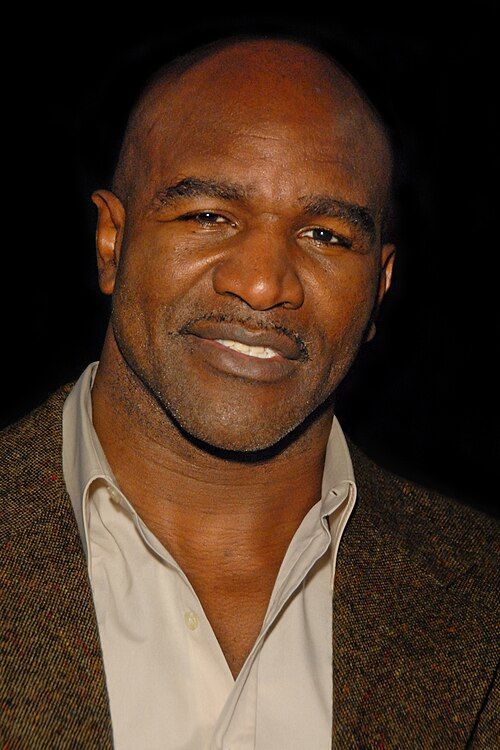
“The man who has no imagination has no wings.”
-
Brief Points Of Interest
- EVANDER HOLYFIELD
In the gospel of boxing’s golden chronicles, Evander Holyfield’s name gleams like a hymn composed by grit, grace, and glory. Born in the heart of Alabama and raised in the impoverished quarters of Atlanta, Holyfield’s early days were marked not by glamour but by hard-won resilience. One of nine children, he was taught that life would not hand him victories — he would have to fight for them, sometimes literally.
From the very beginning, Holyfield’s career followed an arc few dare dream. At just 21, he represented the United States at the 1984 Olympics, winning bronze in the light heavyweight category. But it was in the professional ranks that he carved out his legend — first as a cruiserweight where he did what many failed to do: unify the WBA, WBC, and IBF titles. This feat wasn’t just about belts; it was a defiance of expectations, a working-class man crafting nobility from his fists.
By 1988, Holyfield had cleaned out the cruiserweight division and sought bigger prey — literally. He bulked up, refined his technique, and with a monk-like discipline, stepped into the realm of giants: the heavyweight division. In 1990, he knocked out James “Buster” Douglas to become the undisputed heavyweight champion of the world. It was more than a title; it was history being redrawn. He became the first and only boxer to win undisputed championships in two weight classes — a record carved in granite.
But Holyfield’s bouts were never just about winning. In his three legendary fights with Riddick Bowe and two against Mike Tyson — including the infamous ear-biting incident — Holyfield remained stoic, graceful, and dignified, embodying the warrior code. Fans called him “The Real Deal” not just for his boxing prowess, but for the authenticity with which he carried his burdens and triumphs.
Yet his noblest rounds have perhaps been outside the ring. Through the ‘Holyfield Foundation’, he’s mentored youth, funded scholarships, and built community programs focused on discipline, education, and faith. Holyfield often tells young people: “It’s not the size of a man but the size of his heart that determines who he is.”
His most quoted mantra remains:
“The man who has no imagination has no wings.”
Borrowed and adapted from Ali, perhaps — but Holyfield lived it. His imagination saw beyond belts and bruises; it envisioned a life of service.
Evander Holyfield stands not just as a boxing great but as a humanitarian whose legacy lies in how he gave back, especially to children who came from where he once stood — the forgotten corners of the world.
Michael Jordan
- DOD photo by D. Myles Cullen

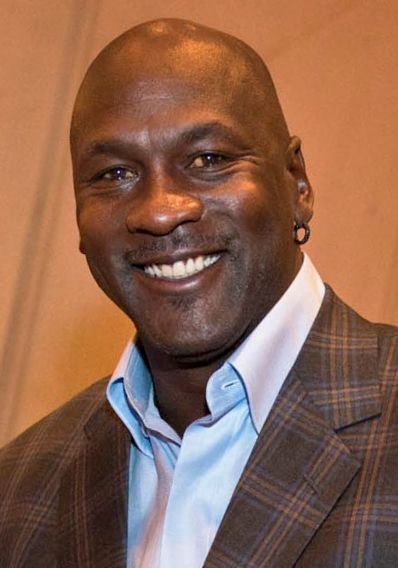
“I’ve missed more than 9,000 shots in my career. I’ve lost almost 300 games. Twenty-six times I’ve been trusted to take the game-winning shot and missed. I’ve failed over and over and over again in my life. And that is why I succeed.”
-
Brief Points Of Interest
~ MICHAEL JORDAN
Greatness rarely announces itself in thunderclaps; it sneaks in through sweat, tenacity, and an almost irrational faith in possibility. Michael Jeffrey Jordan’s story is one that transcends basketball: it is the testament of a man who turned failure into fuel, self-doubt into fire, and competition into art. His journey speaks not only to athletes but to anyone who has ever faced defeat and chosen to rise again.
Born in Brooklyn in 1963 but raised in Wilmington, North Carolina, Jordan’s first encounter with failure was as memorable as any championship. He was famously cut from his high school varsity basketball team—a moment that could have extinguished a lesser spirit. Instead, it became the forge where his resolve was hardened. In this paradox lies the essence of Jordan: he was not born invincible; he became invincible by making a covenant with himself never to surrender.
The world would eventually come to know him as “Air Jordan,” a man who redefined the very geometry of the game. His hang-time, those gravity-defying leaps, were less an athletic feat than a visual poem—suspensions in air that felt like a metaphor for defiance. He lifted not just his teammates, not just the Chicago Bulls, but an entire generation of sports lovers who saw in him the possibility of human excellence.
Six NBA championships, five Most Valuable Player awards, two Olympic gold medals, and induction into the Basketball Hall of Fame—these are the stones in the temple of his legacy. Yet the numbers, dazzling as they are, do not fully capture what Jordan offered humanity. His excellence was democratic: it belonged not just to Chicagoans or Americans but to children dribbling basketballs on cracked pavements in Lagos, Manila, or Rio. He gave the world a language of aspiration that needed no translation.
And there was more than sport. With his Jordan Brand, an offshoot of Nike, he revolutionized athlete branding, opening financial and cultural doors for future stars. His philanthropy—scholarship funds, support for healthcare, and donations to racial equality initiatives—reveals a man aware that greatness without generosity is incomplete.
Jordan’s story also carries lessons about imperfection. His first attempt at baseball, his temporary retirements, and his sometimes bruising competitiveness remind us that icons are still human, prone to missteps and contradictions. Yet it is precisely this humanity, these visible cracks, that makes his brilliance shine even brighter.
For the elderly who read his tale, Jordan is proof that the human spirit can stretch far beyond perceived limits. For the diligent civilian or the aspiring youth, he is evidence that discipline, resilience, and audacity can transform ordinary beginnings into extraordinary legacies.
At the heart of Michael Jordan’s life lies a simple truth: greatness is not measured only by triumphs but by the courage to persist in the face of relentless failure. He is not merely the greatest basketball player of all time—he is a universal emblem of perseverance. In every missed shot, every comeback, every leap, he showed us that to aspire is to live, and to dare is to win.
Shaquille O’Neal
- Copyright by Steve Lipofsky Basketballphoto.com
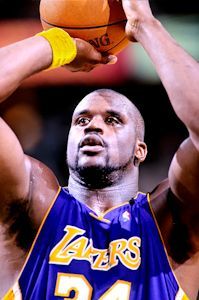
“I’m not the type who will dwell on the past. I’m Shaq".
-
Brief Points Of Interest
- SHAQUILLE O’NEAL
I move forward.” With these words, Shaquille O’Neal, one of the most recognizable athletes in the world, captured the essence of his life: resilience, reinvention, and an abiding sense of joy. To watch Shaq on the basketball court was to witness an unstoppable force of nature, yet beyond the towering dunks and thunderous rebounds lies a story that speaks to humanity, generosity, and the pursuit of peace through laughter and giving.
Born in Newark, New Jersey, in 1972, Shaquille Rashaun O’Neal’s childhood was not gilded by luxury. He was raised by a stepfather, Phillip Harrison, a military man who imposed discipline, and a mother, Lucille O’Neal, who instilled compassion. Newark was a city shadowed by poverty and crime, but it was also where young Shaq learned resilience. His unusual height and strength set him apart early, yet it was not only his size but his spirit that carved his path. That spirit would carry him to Louisiana State University, then to the NBA, where his arrival felt less like an entry than an earthquake.
As a player, Shaquille O’Neal was sheer dominance. Four NBA championships, three Finals MVP awards, fifteen All-Star selections — the record books testify to his greatness. He redefined what a center could be: not merely a post player, but a cultural phenomenon. His rivalry with contemporaries, especially the likes of Hakeem Olajuwon and Tim Duncan, elevated the game. Yet Shaq did not confine himself to the hardwood. He became an entertainer, a rapper, a movie star, and later, a beloved analyst whose humor and candor reminded us that greatness need not abandon humility.
His contributions to humanity transcend sports and entertainment. Shaq’s philanthropic efforts are vast, though often quiet. He has paid off the debts of struggling families, covered funeral costs for strangers, donated millions to children’s hospitals, and given away countless scholarships. “It’s not about me being famous,” he once remarked, “it’s about what I do with that fame.” In those moments, Shaquille O’Neal emerges not as a basketball legend, but as a giant of compassion, who uses wealth and influence not to isolate himself but to bridge divides.
What makes Shaq particularly unique is his ability to embody contradiction: a 7’1”, 325-pound colossus who could intimidate with a scowl and disarm with a smile. He has been a peace ambassador of sorts, advocating for unity in communities fractured by race and poverty. He does this not through lofty speeches but through presence — showing up, giving, laughing, reminding us that dignity is preserved in acts of kindness.
His awards are plentiful: Rookie of the Year, MVP trophies, Olympic gold, even a star on the Hollywood Walk of Fame. Yet perhaps his truest legacy is found in how he inspires others to think beyond their own success. Shaq’s story tells us that no matter how high one climbs, the measure of greatness is found in how much one lifts others.
In Shaquille O’Neal, the world has seen more than a basketball giant. We have seen a man who uses his immense gifts to entertain, to uplift, and to remind us all — greatness is best measured in the lives we touch.
Joel Embiid
- Erik Drost

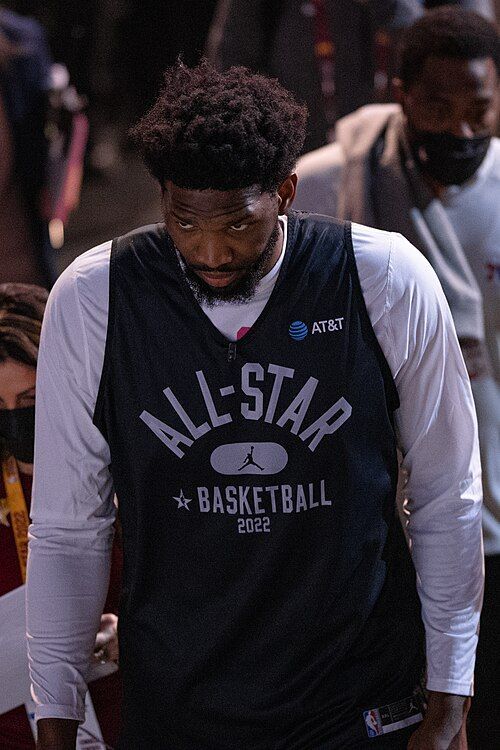
“You can’t give up. You have to keep pushing. That’s how you make greatness.”
-
Brief Points Of Interest
~ JOEL EMBIID
To understand Joel Hans Embiid is to grasp the paradox of triumph born from trial — a man who learned to smile through suffering and found poetry in perseverance. He is the embodiment of the African dream rewritten on hardwood: an echo from Yaoundé, Cameroon, that now resounds in the arenas of Philadelphia and across the basketball world.
Embiid’s story is one of improbable ascension. Born in 1994 to a military father and a devoted mother, basketball was not his first calling. Like many African boys, he dreamt first of being a footballer, even playing volleyball before fate intervened. At age fifteen, his towering frame and quick reflexes caught the eye of Luc Mbah a Moute, another Cameroonian NBA player who saw in him a spark worth nurturing. From that moment, Embiid’s life changed course — a journey from the red dust of Yaoundé to the polished courts of America.
When he arrived in the United States, he was raw, shy, and barely fluent in English. Yet there was a quiet storm inside him. Within three years, his talent blossomed at Kansas University, where he displayed the kind of footwork and finesse unseen in big men since Hakeem Olajuwon — another African great. The NBA soon came calling, and in 2014, the Philadelphia 76ers drafted him as the third overall pick.
Then came the darkness. Injuries, surgeries, and grief. The death of his younger brother Arthur, struck by a car back home in Cameroon, nearly broke him. His body seemed fragile, his dreams deferred by fate’s cruel hand. For two years, he did not play a single NBA game — watching from the sidelines as critics whispered that his story might end before it began.
Yet Embiid rose. He rose with laughter, wit, and iron will. He adopted the moniker “The Process”, a phrase that became both mantra and movement. He told his fans — and himself — to trust in it. Every setback became a step, every injury a lesson. By the time he made his debut, the league had already learned to listen.
On the court, Joel Embiid is an orchestra of contradictions: a seven-foot giant who moves with dancer’s grace, a powerhouse who plays with painter’s precision. His mid-range touch is delicate, his post moves balletic, his defense impenetrable. He redefined what it meant to be a center in the modern NBA — not merely a big man, but a complete athlete, blending African athleticism with intellectual mastery of the game.
When he was crowned NBA MVP in 2023, the moment was more than a personal victory; it was continental. It marked the triumph of Africa’s sons who had once watched from afar, believing the NBA was unreachable. Embiid’s win echoed from Philadelphia to Douala, from Kinshasa to Lagos — a symbol of how talent, when refined by discipline, becomes destiny.
Off the court, Joel Embiid is no less a statesman. Through his “In Memory of Arthur” foundation, he funds education and healthcare programs for children in Cameroon. His philanthropic footprint stretches beyond basketball — building bridges between continents, proving that greatness must be shared to be complete.
He is also a symbol of cultural fusion — proudly Cameroonian, defiantly African, yet universal in his humanity. Whether speaking out against social injustice or joking in post-game interviews, Embiid carries his charisma with the ease of a man who has known both silence and spotlight.
Today, Joel Embiid stands as more than an athlete. He is a lesson in endurance, a testament to the indomitable African spirit that refuses defeat. His laughter, often mischievous and loud, is not mere playfulness — it is survival’s song, a reminder that pain, when transformed, becomes power.
In every dunk, every roar, and every tear, Embiid embodies what it means to rise — to trust the process, and in doing so, to become the process itself.
Israel Adesanya
- MMAnytt
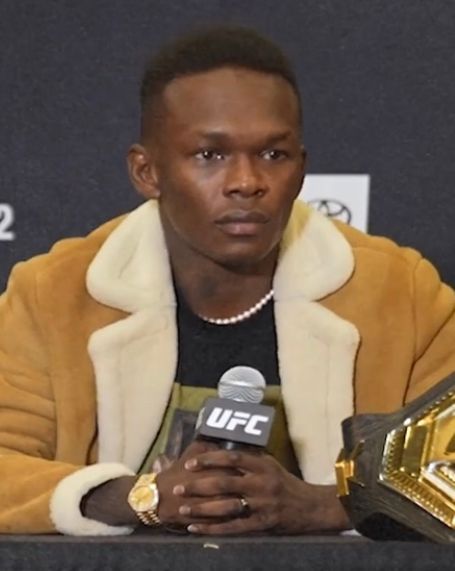
“I’m prepared to die, but I’m also prepared to live for what I believe in.”
-
Brief Points Of Interest
- ISRAEL ADESANYA
There are athletes who fight for fame, and there are those who fight for purpose. Israel Mobolaji Adesanya, born in Lagos, Nigeria, in 1989, belongs to the latter. To watch him move is to witness art in motion — a fusion of poetry, rhythm, and combat, shaped by philosophy as much as by fists. Nicknamed “The Last Stylebender,” Adesanya has not merely dominated the octagon; he has redefined what it means to be a modern warrior — one whose body speaks, whose mind leads, and whose roots never fade.
Adesanya’s story begins like many African odysseys — with migration, adaptation, and ambition. At age ten, he moved with his family to Rotorua, New Zealand, seeking better opportunities. The journey was not smooth. As a black boy in a predominantly white environment, he faced racial slurs and isolation. Yet adversity, for Israel, became instruction. He found solace in Japanese anime and martial arts films, those cinematic worlds where discipline, honor, and courage were sacred codes. What was entertainment for others became education for him.
In those quiet years of self-discovery, Adesanya learned that power was not in aggression but in control. He trained relentlessly in kickboxing, Muay Thai, and boxing, often competing alone in foreign cities, carrying the silent weight of African expectation on his back. Before the world knew his name, he fought in over 80 kickboxing matches, mastering the art of rhythm, distance, and deception — the trifecta that would later define his style.
When he finally entered the UFC in 2018, he did so not as a novice but as a philosopher who had found his canvas. His fighting was theater and theology at once — a spectacle of intellect and instinct. His hands moved like a painter’s brush, his feet like a dancer’s glide, his eyes like a strategist mapping a new empire. Within a year, he was UFC Middleweight Champion, dismantling opponents with surgical precision and an almost prophetic calm.
Adesanya’s victories were not just physical conquests; they were declarations of identity. He fought as a Nigerian, a New Zealander, and an African descendant unafraid of complexity. Each post-fight speech, laced with poetry and wit, became a rallying cry for self-expression and cultural pride. He often reminded the world that confidence is not arrogance when it springs from truth. “I’m unapologetically me,” he said, and millions found permission to be the same.
Off the canvas, Adesanya has become a global voice for mental health, racial justice, and authenticity. He speaks openly about vulnerability, confronting the stigma that men — especially African men — must suppress their emotions. His advocacy stems from personal struggle: the loneliness of migration, the doubts of early failure, and the burden of expectation. Yet he has turned those scars into symbols, showing that real strength is not the absence of fear but the mastery of it.
His charisma transcends sport. He paints, dances, quotes philosophers, and draws inspiration from African spirituality and Japanese anime — an eclectic blend that mirrors the modern African identity: global, adaptive, yet deeply rooted. Every tattoo on his body tells a story, every fight a parable. He does not just win; he narrates victory.
Israel Adesanya’s greatness lies not merely in his championship belts but in his cultural defiance. He has shown that an African son can conquer the world without erasing his accent or his heritage. His success is not just a personal ascent but a continental metaphor — for every child who dares to dream beyond geography, for every soul who believes that discipline and imagination can rewrite destiny.
Today, the Last Stylebender stands not just as a martial artist but as a movement — proof that to master one’s body is to master one’s mind, and to master one’s mind is to master one’s life. His journey from the dusty streets of Lagos to the luminous stages of the UFC is more than a sporting triumph; it is an anthem of possibility.
For in every punch he throws, in every graceful step inside that octagon, Israel Adesanya is not fighting an opponent — he is fighting to keep alive the dream that an African child, armed with courage and creativity, can change the world.
Irene van Dyk
- New Zealand Government, Office of the Governor-General
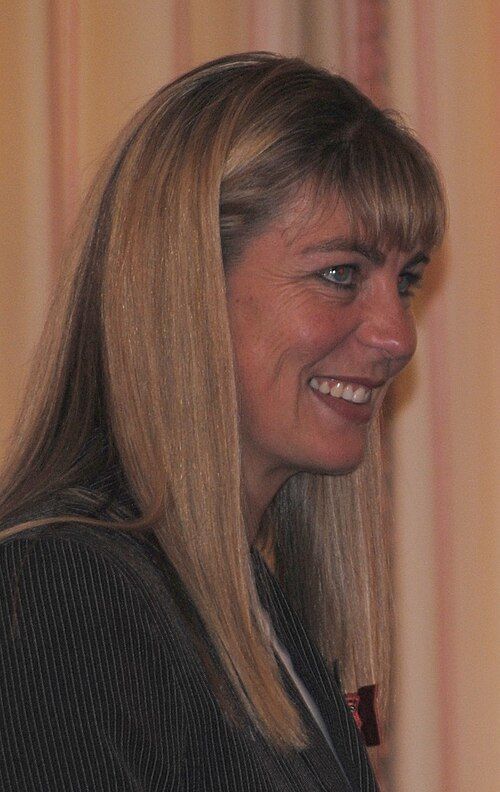
“You play for the name on the front of your jersey, not the one on the back.”
-
Brief Points Of Interest
~ IRENE VAN DYK
In the quiet precision of netball — where agility meets intuition and teamwork becomes its own form of art — Irene van Dyk stands as one of the sport’s most luminous figures. Her name evokes excellence, humility, and a rare kind of strength that transcends borders and generations. Born in South Africa in 1972, and later naturalized as a New Zealander, van Dyk’s journey from a young, determined athlete in apartheid-era Africa to a global ambassador of the sport is a story of perseverance, reinvention, and love — love for the game, and for humanity itself.
Van Dyk’s beginnings were modest. Growing up in Bloemfontein, her world was one of discipline and faith, where opportunities for women in sport were scarce and often underappreciated. Yet from her earliest days, Irene possessed an uncommon resolve — a quiet defiance wrapped in grace. She discovered netball not merely as competition, but as communion; a way to connect, to express, and to belong. Her tall frame, keen reflexes, and instinctive understanding of movement quickly distinguished her.
Representing South Africa, van Dyk rose through the ranks, becoming a symbol of unity during the country’s slow emergence from apartheid’s shadow. Her leadership on the court was not loud but commanding — she led by example, her poise under pressure inspiring teammates and opponents alike. By the late 1990s, she had become one of the sport’s most prolific shooters, her accuracy near perfection, her sportsmanship impeccable.
In 2000, a profound shift occurred: van Dyk moved to New Zealand, a country where netball was almost a national religion. It was both a personal and professional rebirth. As she donned the black dress of the Silver Ferns, she brought with her not only skill but also a renewed sense of purpose — to build bridges between nations, to show that identity is not diminished by change, but deepened by it.
Her arrival transformed the Silver Ferns. Within years, she became the cornerstone of the team’s resurgence, leading them to victories at the 2003 Netball World Championships and the 2006 Commonwealth Games. Her near-90% shooting accuracy turned games into masterclasses, and her partnership with fellow players elevated the team’s cohesion into something symphonic.
What made Irene van Dyk exceptional was not just her athletic ability, but her spirit of service. She viewed her fame as a responsibility — to mentor young players, to promote women’s sports, and to encourage unity through fair play. Her humility became her signature; despite countless accolades, she often deflected praise toward teammates, coaches, and fans. Her interviews were lessons in gratitude, her presence a reminder that true greatness is as much about character as achievement.
Beyond the court, van Dyk has been a steadfast advocate for youth development and gender equality in sports. She has lent her voice to initiatives supporting girls’ participation in athletics, particularly in underprivileged communities. Her life’s work underscores that empowerment begins not in grand gestures, but in everyday encouragement — the belief that every child, regardless of origin or gender, deserves a platform to shine.
Her retirement in 2014 marked the end of a remarkable two-decade international career, yet her legacy continues to reverberate. She remains a beloved figure in both South Africa and New Zealand, an enduring emblem of what sport can achieve when driven by integrity and inclusion.
Irene van Dyk’s story is, at its heart, about belonging and becoming — a woman who crossed oceans, carried cultures, and left imprints far beyond the netball court. She represents the power of quiet excellence, of discipline married to compassion. Her legacy tells us that victory is sweetest when it uplifts others, that greatness finds its true meaning in service.
In a world often divided by color, creed, and competition, Irene van Dyk has shown that sport, at its purest, can be a bridge — and that through grace and grit, one can truly play not just for the name on the jersey, but for the soul of humanity.
Mary Keitany
- SNappa2006
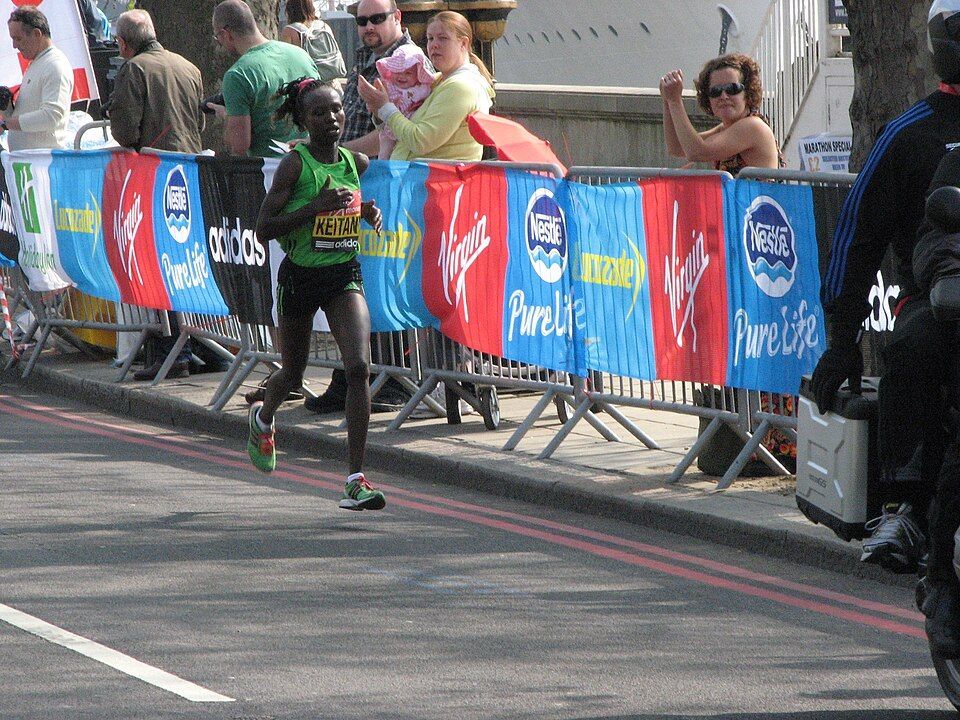
“No journey is too long when you believe in every step.”
-
Brief Points Of Interest
- MARY KEITANY
In the cool morning air of rural Kabarnet, nestled in Kenya’s Rift Valley, a young girl once ran barefoot along winding dirt roads — not in pursuit of fame, but of freedom. That girl, Mary Jepkosgei Keitany, would one day become one of the greatest female marathoners in history, rewriting records and redefining endurance with the quiet confidence of one who runs not to escape, but to arrive.
Keitany’s story, like the best of African odysseys, begins in simplicity and faith. Born in 1982 to humble farmers, she grew up in a landscape that demanded resilience. Daily chores — fetching water, tending goats, and walking long distances to school — became her first form of training. There was no talk then of marathons or medals, only of perseverance. Yet, within that rugged childhood lay the foundation of an unbreakable will.
Her entry into competitive running was almost accidental. At seventeen, Keitany participated in a local race organized by a nearby school. Her victory that day lit a fire that would never dim. She began to train seriously, guided by a vision larger than herself: to run her way into a future where poverty would no longer dictate her destiny. Her early races were difficult — often marked by defeat, exhaustion, and moments of doubt — yet she persisted, every setback a stepping stone toward mastery.
When Mary Keitany finally emerged on the global scene, her rise was meteoric. Her debut marathon in New York City in 2010 announced her arrival to the world — she ran not merely with strength, but with grace, blending power and elegance in equal measure. Over the next decade, she would claim victory in some of the world’s most prestigious races: New York, London, and Ras Al Khaimah, among others. Her crowning glory came in 2017, when she broke the women-only marathon world record at the London Marathon, clocking a staggering 2:17:01.
Yet Keitany’s greatness cannot be measured by time alone. Her running embodied poetry — the rhythm of footfalls echoing faith, the discipline of breath mirroring patience. Watching her run was to witness serenity in motion, the purest expression of human endurance guided by purpose. She ran for Kenya, for women, and for every child who looked at the horizon and saw possibility.
Her victories carried deeper resonance for women in Africa and beyond. She stood as a beacon of what persistence, humility, and self-belief could achieve. Beyond medals, she became an advocate for girls’ education and rural empowerment, using her success to build schools and support community development projects in her home region. Her foundation has quietly sponsored young athletes, ensuring that others may chase dreams with shoes she never had.
Mary Keitany’s character shone brightest outside the limelight. Known for her modesty, she often returned to her village after international triumphs, tending to her family and farm. She never lost touch with her roots — her laughter with neighbors, her prayers at dawn, her love for home-cooked meals — all reminding the world that greatness can dwell in simplicity.
Her story is also one of faith. A devout Christian, Keitany often credited her success to divine grace, insisting that running was not merely a sport, but a calling. Her humility disarmed competitors; her kindness uplifted teammates. She ran with conviction, but without arrogance — her victories were shared, her failures embraced as lessons.
When she retired in 2021, it was with quiet dignity, leaving behind not just records, but a legacy — one built on courage, compassion, and conviction. In her journey from the hills of Kenya to the pinnacles of world sport, she became a symbol of endurance for humanity itself.
Mary Keitany reminds the world that the marathon of life is not won by speed, but by spirit — by those who rise each day, barefoot or burdened, and choose to keep moving. Her strides, once tracing the humble paths of Kabarnet, now live on as a rhythm of hope — for every dreamer who believes that even the longest road can lead home.
PERPETUA NKWOCHA
- Anders Henrikson
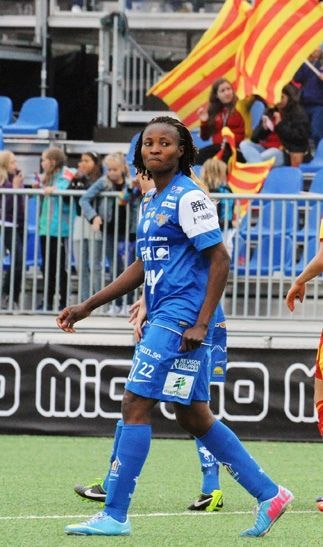
“You play with your heart, not just your legs. The game must first be won inside you.”
-
Brief Points Of Interest
~ PERPETUA NKWOCHA
In the dusty fields of Imo State, Nigeria, a young girl once chased a battered football barefoot, her laughter mingling with the sounds of twilight. To some, it was play. To Perpetua Nkwocha, it was prophecy — the beginning of a journey that would make her one of the most decorated and enduring figures in African women’s football. From humble beginnings to continental glory, her story is one of devotion, discipline, and the daring belief that a woman’s place is wherever her talent leads her.
Born on January 3, 1976, in Ekwueme, Perpetua grew up in a society where girls were rarely encouraged to dream beyond domestic expectations. Yet, she carried a stubborn conviction that the pitch was her destiny. Football became her language of freedom, a way to speak where society demanded silence. With a ball at her feet, she was fearless — her stride swift, her mind sharp, her spirit undaunted.
Her rise to prominence began in Nigeria’s domestic women’s league, where she played for clubs like Pelican Stars and Sunshine Queens. Even in those early years, her talent was unmistakable — her vision on the field, her instinctive positioning, and her unmatched finishing set her apart. By the late 1990s, Nkwocha was no longer just a local star; she had become a continental force, embodying both the power and the potential of African women in sport.
Her legacy was cemented in the African Women’s Championship (AWC) — now known as the Women’s Africa Cup of Nations — where she achieved near-mythical status. Across multiple tournaments, Nkwocha scored with consistency and elegance, securing four titles for Nigeria and earning four African Women’s Footballer of the Year awards (2004, 2005, 2010, 2011). Her 2004 performance remains legendary: she netted nine goals, including four in the final, leading Nigeria to a dominant championship victory.
Her impact extended beyond numbers. Perpetua Nkwocha became the face of African women’s football, proving that brilliance knows no gender, and that perseverance can rewrite history. On the world stage, she represented Nigeria at four FIFA Women’s World Cups and three Olympic Games, carrying not just the nation’s flag but the collective dreams of African girls who saw in her a reflection of what was possible.
When her career took her to Sweden, where she played for Sunnana SK, Nkwocha embraced a new challenge — becoming an ambassador for African talent in Europe. Her professionalism, humility, and unmatched work ethic made her a beloved figure in the Scandinavian football community. She played there not as a foreigner but as a bridge — linking continents through sport and spirit.
Beyond her athletic excellence, Nkwocha’s life tells a larger story — one of service and empowerment. After retiring from active play, she turned to coaching and mentorship, nurturing young female footballers both in Nigeria and abroad. Her goal has never been personal fame, but the creation of pathways for others. “If I can open one door for a girl who dreams,” she once said, “then I have won again.”
Off the field, she is celebrated for her humility and quiet strength. Despite her fame, she remains grounded — deeply connected to her roots, her community, and her faith. Her journey is also an ode to resilience: from playing barefoot in Imo to becoming one of FIFA’s respected icons, Nkwocha’s rise was not gifted, but earned through relentless work and grace.
Her influence transcends the pitch. She stands as a symbol of African womanhood — strong yet compassionate, fierce yet humble. Through her, generations of girls learned that ambition is not rebellion, that persistence is power, and that dignity is the highest form of victory.
Today, Perpetua Nkwocha’s name evokes more than nostalgia; it evokes purpose. She remains a living testament to the truth that talent, when wedded to perseverance, becomes destiny. Her legacy is written not only in goals and medals, but in the confidence she ignited in millions — a reminder that greatness often begins with a barefoot dreamer and a battered ball on a dusty Nigerian field .
Samuel Eto’o
- Charly Neros
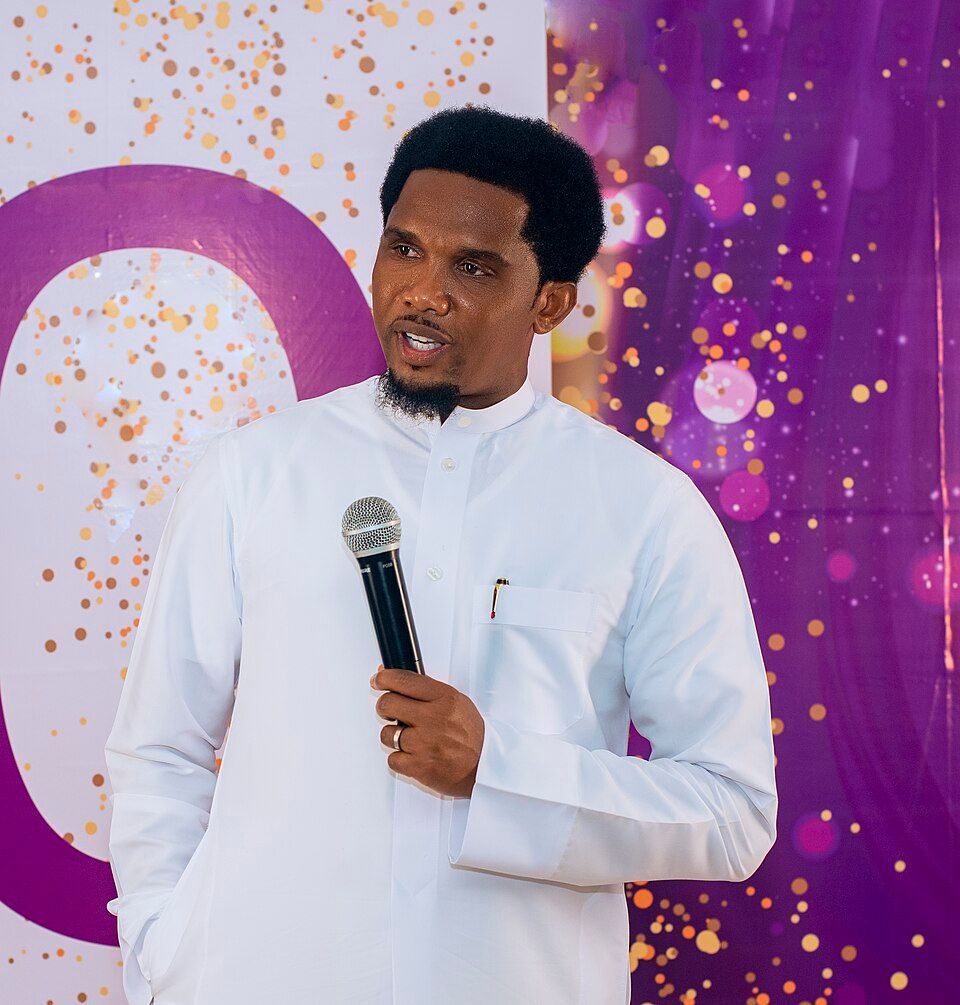
“If you think you are too small to make a difference, you have never spent a night with a mosquito.”
-
Brief Points Of Interest
- SAMUEL ETO’O
In the grand theatre of football, where millions find escape, identity, and belonging, few figures have embodied the pride and possibility of Africa like Samuel Eto’o. His name does not merely recall goals scored or trophies lifted; it summons the story of a continent’s defiance, of talent forged in adversity, and of a man who refused to bow to limitation. Eto’o’s journey — from the dusty streets of Douala to the glittering arenas of Europe — remains a parable of determination and dignity.
Born in 1981 in Nkon, Cameroon, Eto’o grew up in a humble household where dreams often seemed too expensive to afford. Yet, the young boy’s love for football burned brighter than his circumstances. Barefoot, he chased makeshift balls across open fields, his eyes fixed not on poverty but on possibility. That stubborn hope carried him across borders — first to Real Madrid, where he was dismissed as too raw, too African, too unpolished for Europe’s elite. It was a wound, but not a defeat.
What followed was the making of a legend. In Mallorca, Eto’o’s fire met form. His goals began to sing — sharp, unstoppable, fierce. By the time he joined FC Barcelona, the world had begun to notice what Africa had long known: that genius knows no geography. Alongside Ronaldinho, Xavi, and Iniesta, Eto’o became the heart of Barcelona’s golden age. His pace, precision, and predatory instincts delivered triumph after triumph — including two UEFA Champions League titles with the club.
Yet his greatness extended beyond the pitch. Eto’o’s success was not born from comfort; it was wrestled from condescension. In stadiums across Europe, he endured racist taunts and monkey chants — wounds that cut deeper than physical tackles. Still, he did not flinch. He fought back not with violence, but with goals and grace. He became a voice against racism, calling out the hypocrisy of institutions that celebrated African talent but tolerated abuse. In doing so, he gave courage to younger players who would follow his trail — from Drogba to Salah to Osimhen.
Eto’o’s achievements are encyclopedic: four African Player of the Year awards, over 350 career goals, and trophies across Spain, Italy, and England. He remains the only player to have won the Champions League with two different clubs in consecutive seasons — Barcelona in 2009 and Inter Milan in 2010. At Inter, under José Mourinho, Eto’o reinvented himself — no longer just a striker, but a warrior who defended, sacrificed, and led from every blade of grass. That season, he lifted the historic treble, cementing his place among football’s immortals.
Yet, for all his victories, Eto’o’s true triumph lies in what he has done for others. Through the Samuel Eto’o Foundation, he has championed education and health initiatives across Africa, providing scholarships and medical support for underprivileged children. He has also used his platform to advocate for the empowerment of African youth, insisting that the continent’s next generation deserves opportunity, not pity.
Eto’o’s story is not just about football — it is about freedom. It is the story of a boy who refused to believe that greatness must have a European accent, a man who showed that excellence can emerge from anywhere the human spirit refuses to yield.
In every sense, Samuel Eto’o stands as the embodiment of African possibility: bold, brilliant, and unbroken. His legacy is a reminder that the ball, when kicked with purpose and conviction, can carry not just dreams — but history itself.
Didier Drogba
- rayand
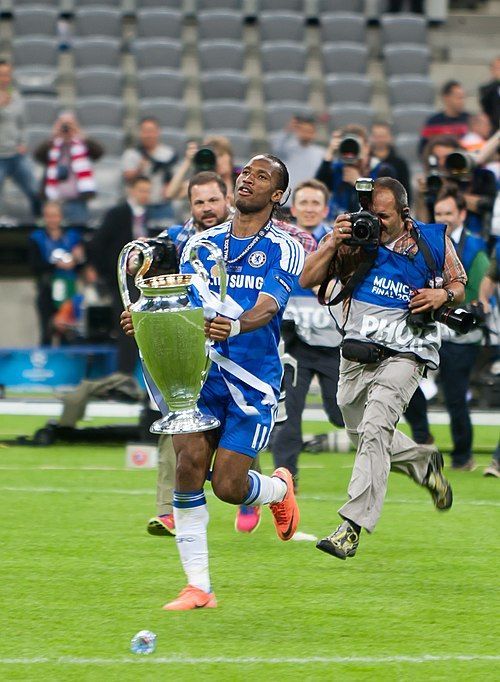
“I would like to be remembered as an Ivorian and a patriot”
-
Brief Points Of Interest
~ DIDIER DROGBA
In the chronicles of African greatness, Didier Drogba occupies a sacred place — not only for his goals but for the peace he inspired. His story is a fusion of football, faith, and the fragile miracle of unity in a divided land. For many, he was a forward whose power terrified defenders; but for Ivorians, he was more — a bridge across bloodlines, a symbol of hope when his nation teetered on the edge of collapse.
Born in Abidjan in 1978, Drogba’s early years were marked by separation and longing. Sent to France as a boy to live with his uncle, he grew up far from home, learning discipline and endurance as the twin tutors of ambition. His love for football was both rebellion and refuge — the ball became his companion in exile, a language that transcended distance.
When he emerged on the European stage, first with Guingamp and later with Olympique Marseille, his rise felt meteoric. At Marseille, he was more than a scorer; he was a spectacle — strength fused with grace, aggression tempered by elegance. Then came the move that would define him: Chelsea Football Club, 2004. Under José Mourinho, Drogba transformed into the archetype of the modern striker — powerful, relentless, and profoundly unselfish.
At Chelsea, Drogba was not just a footballer; he was a force of nature. His goals came in moments that demanded courage — in finals, in extra time, in heartbreak. The 2012 UEFA Champions League Final remains his eternal monument: the header that equalized against Bayern Munich, the penalty that delivered Chelsea their first European crown. It was not merely sport; it was poetry.
Yet the most powerful chapter of Drogba’s life was written not on a field, but before a camera. In 2005, as the Ivorian civil war raged and blood spilled between the north and south, Drogba knelt before the nation on live television. Surrounded by his teammates, he pleaded with his people to lay down their arms, to let football remind them of their shared identity. “We have proved that all Ivorians can live together,” he said. “Please — put down your weapons.”
That night, history shifted. His words, delivered with the moral authority only love can command, helped broker a ceasefire. Soon after, the next national match was moved to Bouaké, a rebel stronghold — and there, under Drogba’s watchful eyes, Ivory Coast played as one. Football, that ancient opiate of the people, became a salve.
In that moment, Didier Drogba transcended sport. He became a statesman of the soul, an ambassador of peace. For Africa — long portrayed as fractured and fragile — he embodied reconciliation. He proved that leadership is not always born of office, but of courage.
Over his illustrious career, Drogba won four Premier League titles, four FA Cups, and the UEFA Champions League, scoring more than 300 goals for club and country. He was named African Player of the Year twice, yet his truest accolade is found in the hearts of Ivorians who saw him as a peacemaker before a player.
Beyond the pitch, his Didier Drogba Foundation continues to provide healthcare, education, and infrastructure across West Africa — tangible proof that fame, when allied with conscience, can become philanthropy.
In his retirement, Drogba has remained a voice for youth empowerment and African self-determination. His life reminds us that greatness is not the sum of victories, but the meaning they inspire. He turned football into a language of healing, his goals into gestures of hope.
Didier Drogba’s story, ultimately, is about redemption — of a man, a team, and a nation. It tells us that even amid chaos, humanity can find rhythm; that a ball, struck cleanly and courageously, can do more than ripple a net — it can awaken a nation’s soul.
Ian Wright
- Duk3L1xon
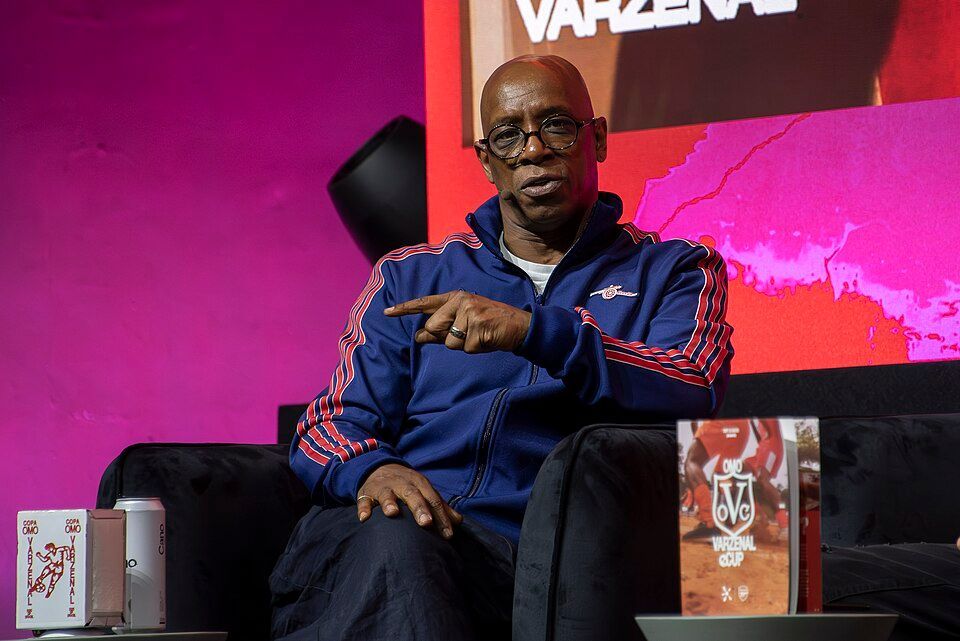
“Football is my story — it saved me from the streets, from anger, from becoming a man I would’ve hated.”
-
Brief Points Of Interest
- IAN WRIGHT
With those words, Ian Wright captured the essence of a life that began in the shadows and burst into the floodlights of English football. His story is not merely one of goals and glory; it is a parable of resilience — of how talent, when disciplined by hardship, can turn rage into art and adversity into triumph.
Born in 1963 in Woolwich, South London, Wright’s early years were a cocktail of poverty, fear, and fractured family life. His father’s absence and his stepfather’s cruelty hardened him before the world ever showed him mercy. Football became his lifeline, the single bright thread in an otherwise dark tapestry. Yet even that thread was often pulled away — coaches doubted him, clubs rejected him, and society’s low expectations pressed upon him like a sentence.
For years, Wright played on the margins — semi-professional, underpaid, and overlooked. He was twenty-one, working as a plasterer and raising two sons, when the call finally came from Crystal Palace. It wasn’t stardom; it was survival. He grabbed it with the hunger of a man who knew how rare a second chance could be. At Palace, his ferocity and flair were magnetic — every goal a defiant declaration that he belonged. By 1989, he had scored twice in the FA Cup Final against Manchester United, etching his name into the mythology of the club.
Then came Arsenal, and with it, immortality. Under George Graham’s stern command, Wright became the North London club’s heartbeat — relentless, vocal, unapologetically emotional. His goals were not just numbers; they were catharsis, each one a release of years of frustration, each celebration a cry of liberation.
By the time he left Arsenal in 1998, he had scored 185 goals, becoming their all-time leading scorer — a record that stood for almost two decades. Yet Wright’s influence transcended the pitch. He embodied a new archetype: the working-class Black man who defied Britain’s unspoken ceilings with charisma, conviction, and sheer will.
Off the field, Wright’s warmth made him a people’s champion. His later years as a pundit, commentator, and advocate revealed a man transformed by reflection. He spoke openly about his youth, his mistakes, and his gratitude — especially toward the teacher, Mr. Sydney Pigden, who once told a troubled boy he was destined for more. When Wright reunited with that teacher decades later, tears flowed freely — a testament to the redemptive power of kindness.
In a sport increasingly sterilized by money, Wright remains refreshingly human — passionate, flawed, and sincere. He uses his voice not just to critique tactics but to confront racism, champion women’s football, and mentor the next generation. His presence on screens across Britain is not just nostalgia; it is continuity — proof that honesty still has a place in modern fame.
Ian Wright’s story is the anatomy of perseverance. It teaches that success is not a straight road but a journey through rejection, discipline, and rediscovery. He rose from neglect to national adoration without ever losing the boy who once dreamed through the railings of a council estate.
In the final measure, Wright is not merely a football legend. He is a storyteller, a reminder that greatness often grows from broken soil — and that sometimes, the loudest roar of victory comes not from the crowd, but from a healed heart.
FAITH KIPYEGON
- Erik van Leeuwen, attribution: Erik van Leeuwen (bron: Wikipedia)
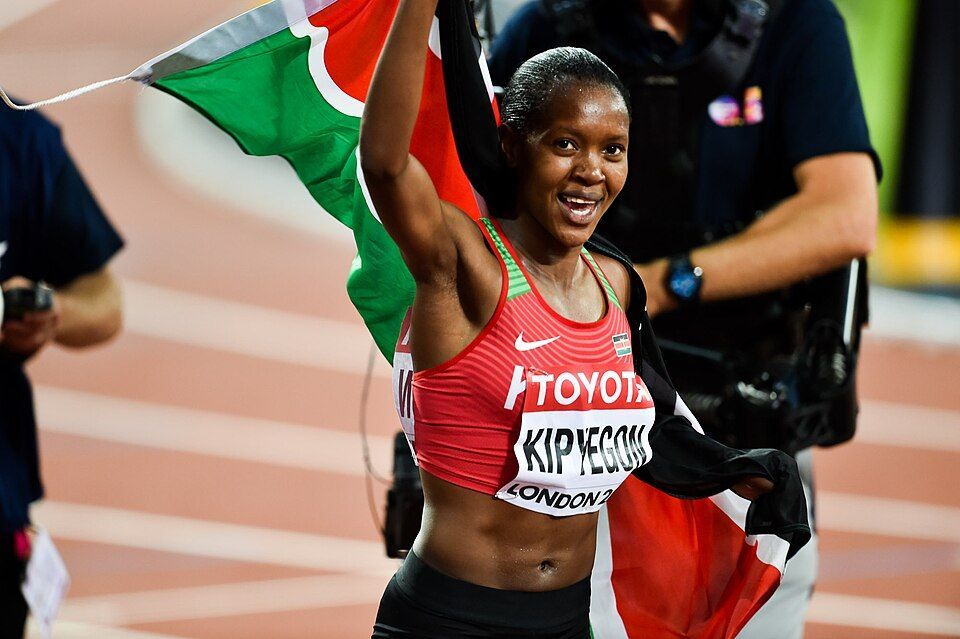
“Every race is a test — not of speed alone, but of faith in what you cannot yet see.”
-
Brief Points Of Interest
~ FAITH KIPYEGON
Faith Kipyegon’s story unfolds like a long-distance run through the valleys and peaks of destiny — a journey marked not by sudden explosions of brilliance but by an unwavering grace that conquers time, pain, and doubt. In her, the world sees more than an athlete; it sees a symbol of perseverance, motherhood, and the tender strength of a woman who runs not to escape but to belong.
Born in 1994 in Bomet County, Kenya — a region of red earth and resilient hearts — Kipyegon’s path to greatness was shaped by simplicity and struggle. She ran barefoot across the fields of her childhood, chasing horizons rather than medals. Her father, once a 400-meter runner, recognized her rare rhythm early, but in a land abundant with talent, raw speed alone meant little. What distinguished Faith was her patience — a quiet conviction that victory was not just about who starts fastest, but who endures longest.
Her rise was steady and profound. By the time she claimed gold at the 2014 Commonwealth Games, she had already established herself as one of the most promising middle-distance runners on the continent. Yet the world truly took notice when she lined up in Rio de Janeiro in 2016. With serene composure and tactical mastery, she conquered the 1500 meters, bringing home Kenya’s first-ever Olympic gold in that event. Four years later, she did it again in Tokyo 2020, defying both time and expectation — a mother returning to reclaim her throne.
Motherhood, often seen as a pause in athletic careers, became Kipyegon’s source of new strength. After giving birth to her daughter, Alyn, she spoke candidly about the difficulty of rebuilding her body and spirit. Yet she returned fiercer, sharper, more assured — as if motherhood had deepened rather than diluted her competitive fire. In 2023, she shattered the world records in the 1500m, 5000m, and the mile within a single season — a feat that redefined the boundaries of possibility in women’s athletics.
Kipyegon’s brilliance is as much mental as it is physical. She runs with an almost spiritual calm, her face an emblem of focus, her strides measured and efficient. There are no theatrics, no grand gestures — only the poetry of motion and the discipline of belief. Her humility is legendary; she speaks softly, thanks freely, and carries her victories as if they were community triumphs rather than personal conquests.
In an era of noise, Faith Kipyegon represents the quiet revolution — proof that dominance need not come cloaked in arrogance. She has become a global ambassador for resilience, gender equality, and African excellence. Her story resonates deeply among women who juggle roles, dreams, and duties, and among men who have learned to see strength in grace.
Kipyegon reminds us that endurance is an act of faith — faith in process, in timing, in the long rhythm of life that favours the consistent over the flamboyant. Her life testifies that one can break records and remain gentle, that one can rise to global fame and still kneel in gratitude before one’s people.
Faith Kipyegon is not just a name in the annals of sport; she is a metaphor for the unyielding African spirit — soft-spoken yet indomitable, graceful yet unrelenting. In her quiet storm, humanity rediscovers that greatness is not always loud. Sometimes, it whispers — and keeps running.
ELIUD KIPCHOGE
- The Wolf at Flickr.com
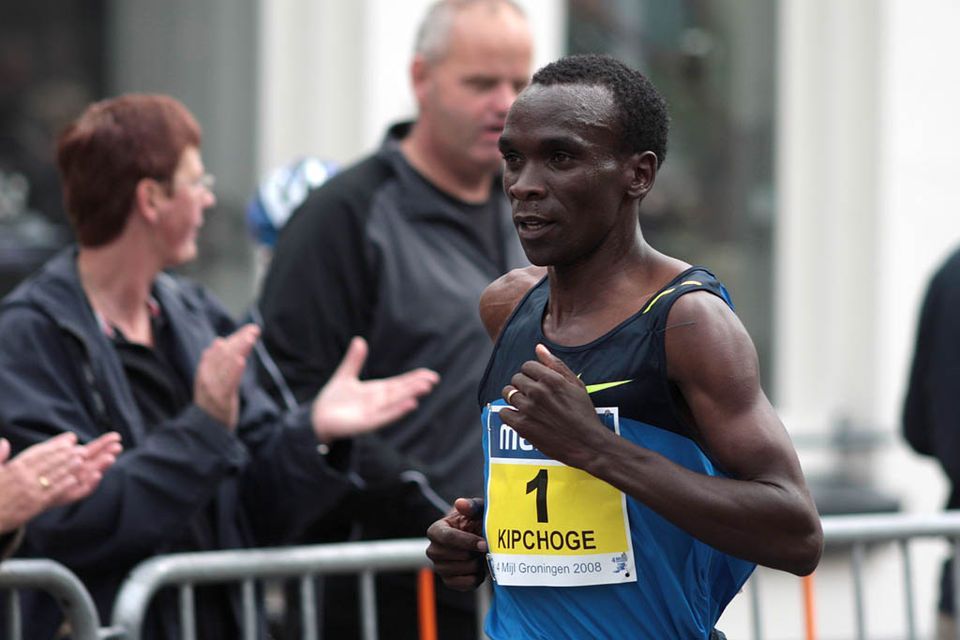
“No human is limited.”
-
Brief Points Of Interest
- ELIUD KIPCHOGE
Those four words, simple yet seismic, encapsulate the soul of Eliud Kipchoge — a man who has not merely run marathons but rewritten the philosophy of human endurance. To watch Kipchoge run is to witness serenity in motion, a harmony between body and will so complete that he seems to glide rather than race. He is not just an athlete; he is a sage of discipline, whose footsteps echo with purpose and whose humility humbles even his victories.
Born in 1984 in Kapsisiywa, Kenya, Kipchoge grew up in a world where running was as natural as breathing. The red dust of the Rift Valley was his first track, his mother — a teacher — his first mentor. Life in rural Kenya demanded resilience: early mornings, long walks to school, and the quiet dignity of hard work. Running began not as sport, but as a necessity, a way to bridge the distances of daily life. Yet even then, the young Eliud’s pace carried an uncommon grace — unhurried yet unwavering, humble yet purposeful.
His rise was gradual, anchored in an extraordinary work ethic and mental discipline. At 18, he defeated legends like Hicham El Guerrouj and Kenenisa Bekele at the 2003 World Championships, announcing his arrival as a prodigy of distance running. Years later, when he transitioned to the marathon, Kipchoge transformed the event itself — turning what was once a contest of exhaustion into a meditative art.
Every marathon he ran became a masterclass in control and clarity. His composure — that serene smile even as others wilted — spoke of an inner equilibrium rare in sport. The 2016 Rio Olympics and 2020 Tokyo Olympics cemented his reign as the greatest marathoner of all time, but his defining moment came not in a race officially recognized, but in a human experiment: the INEOS 1:59 Challenge in Vienna, 2019.
There, Kipchoge did the unthinkable — finishing a marathon in 1:59:40, breaking the two-hour barrier once deemed impossible. It was not just an athletic feat; it was a declaration of human potential. As he crossed the line, he raised his arms and smiled — not in arrogance, but in revelation. “No human is limited,” he said, and the world believed him.
Beyond the stopwatch and medals, Kipchoge’s greatness lies in his philosophy. He trains in a communal camp in Kaptagat, where world champions sweep floors, share meals, and live without excess. To him, running is not about fame but about self-mastery. He reads philosophy, speaks softly about discipline and humility, and likens the marathon to life itself — a journey of patience, rhythm, and faith.
Eliud Kipchoge has become a moral compass in the often-chaotic world of sports. He advocates for education, environmental preservation, and sustainable living in Africa. His foundation empowers communities through literacy and reforestation initiatives, merging athletic excellence with civic purpose. In his stillness, there is strength; in his modesty, an ocean of wisdom.
Kipchoge’s legacy transcends distance running. He reminds humanity that barriers exist only until courage dissolves them. His story — from the dusty paths of Nandi County to the global stage — is not about talent alone, but the sacred alliance between discipline and dream.
He runs not for applause, but for enlightenment. Each stride is a sermon on persistence; each finish line, a quiet affirmation that greatness is found not in speed, but in surrender to purpose. In Eliud Kipchoge, humanity finds its most enduring truth — that the greatest victories are often won in silence, one steady step at a time.
MOHAMED SALAH
- Mehdi Bolourian
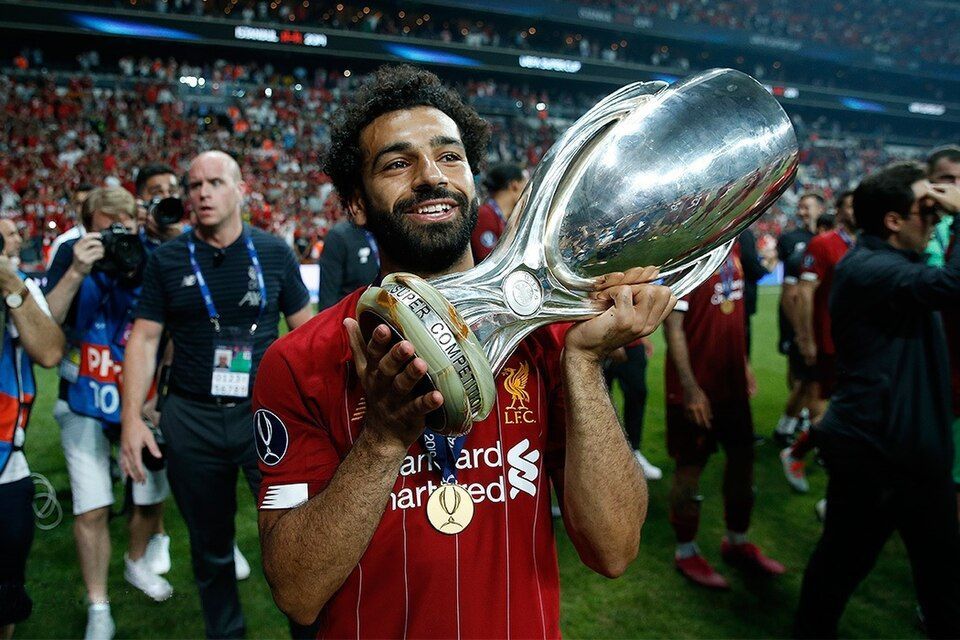
“I always say that my life has been about sacrifice — sacrifice for the dream, sacrifice for the people who believed in me.”
-
Brief Points Of Interest
~ MOHAMED SALAH
In Mohamed Salah, the world sees more than a footballer — it sees a living metaphor for faith, humility, and perseverance. He is the boy from Nagrig, a quiet village in Egypt’s Gharbia Governorate, who turned dusty pitches into sacred grounds of destiny. His rise from obscurity to global fame reads like a modern epic — one woven with grit, grace, and an unwavering belief in the dignity of labor and devotion.
Born in 1992, Salah’s early life was marked by modesty and long journeys. As a teenager, he would travel nearly nine hours daily — four and a half hours each way — to train in Cairo, carrying his boots and his hope. There were moments of exhaustion, moments when the road seemed too long, yet he never turned back. Football, for him, was not just a passion; it was a covenant — a way to bring light to his village, to his country, and to a continent often misrepresented in global arenas.
Salah’s ascent through the ranks of El Mokawloon SC, then to Basel, Chelsea, Fiorentina, Roma, and finally Liverpool, was neither smooth nor celebrated. At Chelsea, he faced rejection and limited playtime, a humbling detour that could have broken many spirits. Yet Salah turned adversity into education, learning not only to refine his skill but to discipline his mind. When he joined AS Roma, his fire rekindled — every goal a silent reply to those who doubted his worth.
Then came Liverpool — and with it, a new chapter in football’s folklore. Under Jürgen Klopp, Salah transformed from promise to phenomenon. His debut season shattered records: 44 goals, breathtaking speed, and a relentless work ethic that earned him the PFA Player of the Year award. His partnership with Sadio Mané and Roberto Firmino was not merely tactical brilliance; it was a brotherhood of purpose — three African sons redefining the beauty and balance of modern football.
Salah’s legacy, however, extends far beyond the pitch. His humility has become his crown. In a sport where egos often eclipse empathy, Salah remains remarkably grounded. He kneels in sujood after every goal — a gesture of gratitude to God, not a performance for the crowd. His generosity is legendary: building schools, a hospital, and a youth center in Nagrig; funding medical treatments for the poor; and quietly supporting refugees and children’s charities across the Middle East and Africa.
In him, faith is not a barrier to progress but its moral compass. Salah has reshaped perceptions of Muslim identity in Western sport — showing that discipline, kindness, and piety are not opposites of success but its pillars. For millions, he represents possibility: that one can be devout yet daring, humble yet heroic.
His journey is a hymn to resilience. Through his quiet strength, Salah restores something pure to the world of football — the belief that success is sweetest when shared, that greatness is dignified by humility. His smile, as radiant as his stride, speaks of a man at peace with his calling.
Mohamed Salah runs not for personal glory but for legacy — one measured not only in goals but in goodness. He has become Egypt’s gift to the world: a reminder that true champions are not defined by trophies, but by the lives they uplift, the bridges they build, and the light they leave behind.
KENENISA BEKELE
- Erik van Leeuwen
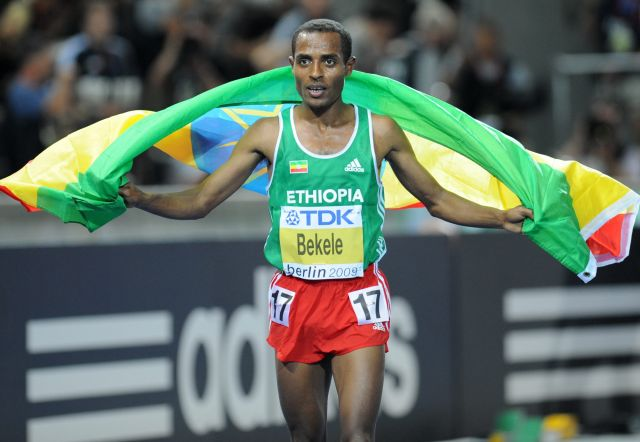
“I run with my heart. When my legs are tired, my heart keeps me going.”
-
Brief Points Of Interest
- KENENISA BEKELE
In the story of Kenenisa Bekele, one finds not only the anatomy of speed but the philosophy of endurance — a poetic blend of grace, suffering, and unyielding will. He is Ethiopia’s quiet conqueror; a man whose footsteps carry the rhythm of the highlands and the spirit of a nation that has long run not merely for medals but for meaning.
Born in 1982 in Bekoji, a small town nestled in Ethiopia’s Arsi Province, Bekele was raised among legends. The red earth of Bekoji had already birthed heroes — Miruts Yifter, Derartu Tulu, and Haile Gebrselassie — and yet it would be Bekele who would redefine what greatness meant. As a boy, he chased cattle through fog-draped hills, his lungs molded by altitude, his body trained by nature. Running was not an ambition; it was a way of life — a daily communion with the land and its silence.
His rise to prominence came with the inevitability of a sunrise. By 2002, he was already dominating cross-country circuits with a style both elegant and devastating. His stride was compact, efficient, almost mathematical in precision. Yet behind that composure burned a fire of quiet defiance. He trained harder, ran faster, and thought deeper than most — aware that every race was a dialogue between pain and purpose.
Bekele’s golden years transformed the landscape of long-distance running. From 2003 to 2009, he reigned as the undisputed king of the track, capturing three Olympic gold medals and five World Championship titles. His world records in the 5000m and 10,000m, once thought unassailable, stood for over a decade — symbols of a discipline so absolute it bordered on artistry. Watching Bekele run was to witness mastery: no wasted motion, no visible strain — just rhythm, control, and an almost spiritual patience.
Yet, behind every triumph was struggle. The death of his fiancée, Alem Techale, in 2005 struck him deeply, leaving scars unseen. Injuries followed — long, silent years of pain and isolation. The world moved on to new heroes, new records, yet Bekele remained steadfast, returning time and again to reclaim his rhythm. His comeback marathons — particularly Berlin 2016 and Berlin 2019, where he missed the world record by just two seconds — reminded the world that legends do not fade; they evolve.
Beyond medals and accolades, Kenenisa Bekele symbolizes perseverance born of humility. He has used his platform to advocate for Ethiopia’s youth, urging them to believe in diligence and patience over shortcuts and spectacle. Through his Kenenisa Sports Resort near Addis Ababa, he nurtures future generations of runners, providing training, mentorship, and opportunity — a legacy rooted not in fame, but in stewardship.
Bekele’s genius lies not only in his feet but in his philosophy. He treats running as meditation — a search for equilibrium between the inner and outer world. His calm demeanor masks a fierce intelligence, a mind always dissecting rhythm, wind, and will. To him, victory is not the absence of pain but the mastery of it.
Kenenisa Bekele remains one of the most complete athletes the world has ever seen — not loud, not flamboyant, but eternally resolute. His story is Africa’s timeless refrain: that greatness is not born in comfort, that the path to immortality is often lonely, and that the truest champions are those who find peace even in pursuit.
When he runs, it is as though the earth itself exhales — steady, unbroken, and beautifully human.
JACQUES KALLIS
- Kolkata Knight Riders - Official
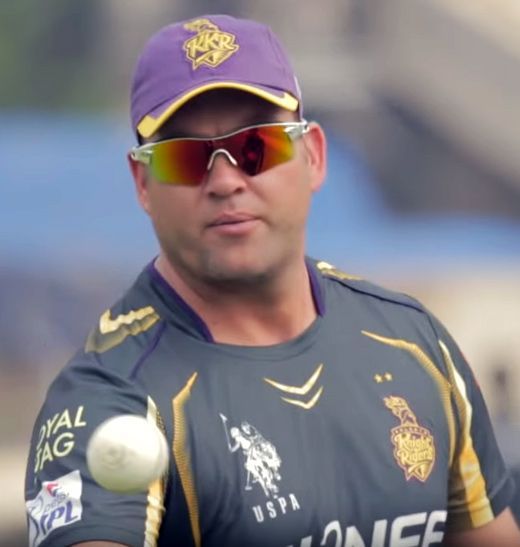
“You don’t chase greatness — you build it, one disciplined moment at a time.”
-
Brief Points Of Interest
~ JACQUES KALLIS
In Jacques Kallis, cricket found its still point — a man who neither courted attention nor crumbled under its weight. His career was not painted in flamboyance or noise, but in the quiet craftsmanship of consistency. He was a colossus who made excellence seem effortless, a cricketer whose every inning, every delivery, every catch carried the calm precision of a master sculptor. To speak of Kallis is to speak of a man who embodied balance — between bat and ball, skill and humility, power and restraint.
Born in Cape Town, South Africa, in 1975, Jacques Henry Kallis grew up during a time when his country’s cricketing soul was struggling to rejoin the international fold. The young Kallis came of age as South Africa was emerging from apartheid’s shadows, and in him, the nation found a player whose style reflected both rebirth and reliability. From the start, he was different — reserved, methodical, almost monk-like in his devotion to the craft. His love for the game was measured not in words, but in discipline.
Kallis made his Test debut in 1995 at just twenty, facing an era of fearsome bowlers — Ambrose, Walsh, McGrath, and Warne. Early struggles only steeled his resolve. By the late 1990s, his technique had matured into something elemental: compact defense, elegant drives, and an ability to endure any bowling storm. He did not dominate matches through aggression, but through attrition — wearing down opposition by playing with time itself.
Across two decades, Kallis constructed a record that borders on the mythical: 13,289 Test runs, 292 wickets, and 200 catches. Only a handful in cricket’s history have achieved such symmetry. He was not a part-time bowler nor a reluctant batsman; he was the complete cricketer — South Africa’s answer to the eternal question of balance. In ODIs, he added over 11,000 runs and 273 wickets, serving as the team’s spine through triumphs and trials alike.
His peers often described him as a “machine,” yet that term, while apt for his precision, underestimates his soul. Kallis’s greatness came not just from skill, but from temperament. He possessed a stoic grace — unflappable in pressure, immune to fame. When others sought adulation, Kallis sought improvement. Even in victory, his celebrations were subdued, his humility almost disarming.
Beyond the numbers, Kallis’s contribution to humanity came through mentorship and example. He proved that leadership is not always loud, that integrity and consistency can inspire as deeply as charisma. His commitment to youth development programs in South Africa and his involvement in charitable cricket initiatives demonstrated his belief that sport could heal and uplift communities still scarred by inequality.
In later years, as a coach and mentor, he brought that same patience and balance to the next generation, shaping players not just for performance but for character. His philosophy was simple: cricket is, a reflection of life — success demands rhythm, respect, and relentless work.
Kallis’s story is not one of meteoric rise or flamboyant genius, but of enduring excellence. He reminds us that greatness is not always loud; sometimes it is the quiet man, walking off the field with head bowed and bat raised, who carries the deepest echoes of victory.
Jacques Kallis remains a figure of rare integrity — a craftsman who gave the game its poetry through precision. His career is both monument and mirror: a monument to dedication and a mirror for every young athlete who believes that mastery is built, not bestowed. In his silence, cricket found its balance; in his humility, its nobility.
KIRSTY COVENTRY
- Martin Rulsch, Wikimedia Commons

“The water has always been my mirror — it reflects not who I am, but who I strive to become.”
-
Brief Points Of Interest
- KIRSTY COVENTRY
Kirsty Coventry’s journey is one of elegance and endurance — a story not merely of medals won but of courage quietly carried. To many across Africa, she is more than a swimmer; she is a symbol of what happens when talent meets purpose and discipline finds its voice in compassion. In a world that often measures greatness in fleeting applause, Coventry’s legacy endures in ripples that touch humanity itself.
Born in Harare, Zimbabwe, in 1983, Kirsty’s introduction to swimming began not in a polished pool but in an environment that reflected the modest aspirations of a nation still finding its post-independence identity. Her love for water was instinctive, her focus unwavering. Even as a child, she carried an air of serenity — a rare blend of calm and competitive hunger. By her teenage years, it was clear that she possessed something extraordinary: a relentless self-belief nurtured not by privilege, but by perseverance.
When she first represented Zimbabwe at the 2000 Sydney Olympics, the world barely noticed. She returned home without a medal, yet with a heart sharpened by experience. Four years later, in **Athens 2004, everything changed. With poise and power, Coventry surged through the lanes, capturing three medals — including gold in the 200m backstroke — and placing Zimbabwe on the global sporting map. Her triumph was more than personal; it was national resurrection. For a country weary of political and economic turmoil, Coventry became a beacon of unity and pride.
Her golden touch continued at the 2008 Beijing Olympics, where she claimed another gold, three silver medals, and broke several world records. By then, the world had begun to call her “Africa’s Golden Girl.” Yet what truly defined her was not her times or titles, but her composure. She swam with grace — technically perfect, emotionally grounded, spiritually calm. Every stroke seemed to whisper a truth she lived by: that victory is hollow without humility.
Coventry’s life after the pool is no less remarkable. She transitioned from athlete to stateswoman, dedicating her platform to public service and youth empowerment. As Zimbabwe’s Minister of Sport, Arts and Recreation, and later as Chairperson of the IOC Athletes’ Commission, she became a bridge between policy and humanity. Her advocacy for athletes’ rights, gender equality, and education reform reflects her belief that sport is not just competition — it is community.
Her foundation, Kirsty Coventry Academy, continues to inspire and nurture young talents, particularly from underprivileged backgrounds. In every initiative she leads, one sees the same discipline that guided her in the pool — quiet efficiency, integrity, and an unyielding belief in possibility.
Coventry’s story stands as a testament to Africa’s evolving narrative — one that celebrates not only the triumphs of the body but also the victories of the spirit. She has shown that excellence does not demand arrogance, that service dignifies success, and that the truest test of greatness is how much one gives back.
In her, water becomes metaphor — for resilience, reflection, and renewal. Her journey reminds us that heroes need not roar; sometimes they glide, serene and unstoppable, through the waters of destiny.
Kirsty Coventry remains the most decorated African Olympian in history — a fact she wears lightly, as though medals were mere echoes of her greater mission. Through her, Zimbabwe found both pride and purpose, and the world discovered that grace, when disciplined by purpose, can be the rarest form of strength.
Yaya Touré
- Puma AG
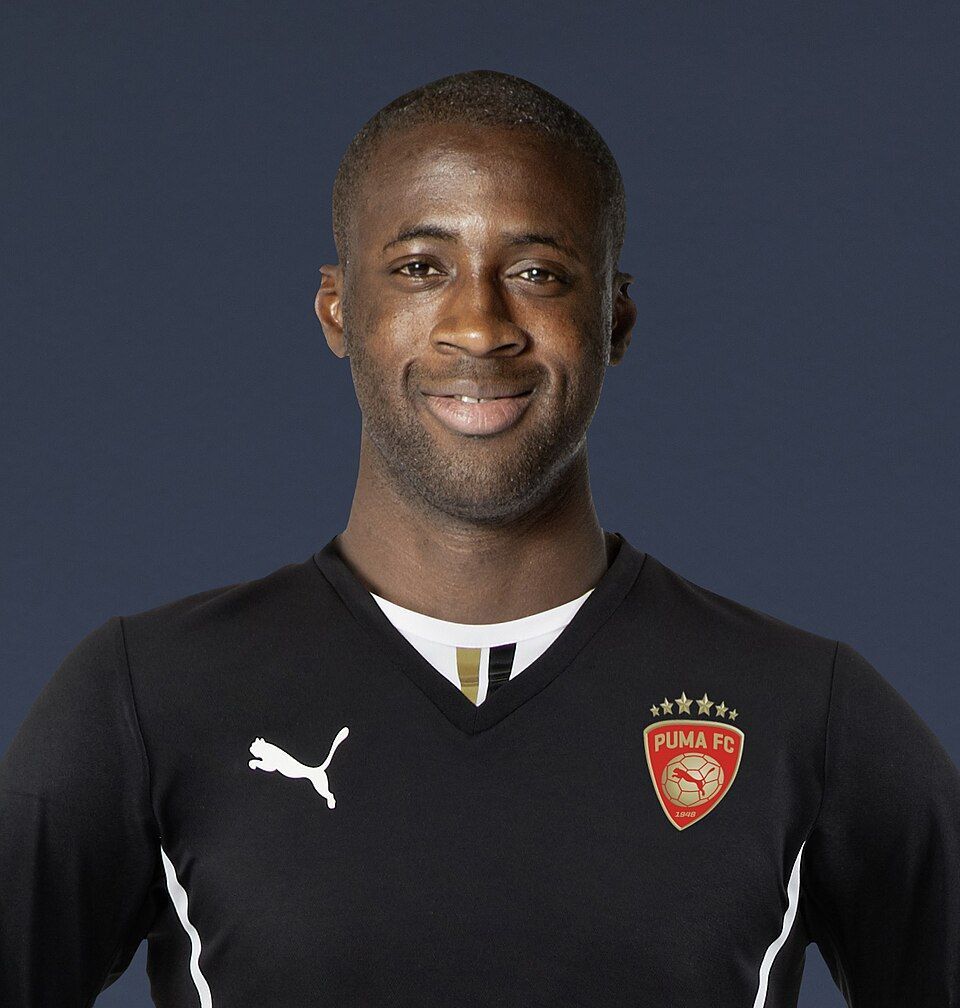
“If you believe in yourself, even silence can make noise.”
-
Brief Points Of Interest
~ YAYA TOURÉ
In the cathedral of world football, where flair often overshadows function, Yaya Touré stood as both architect and artist — the heartbeat of a generation that taught Africa to dream without apology. His game was not merely about strength or skill, but about control — the ability to command space, dictate rhythm, and turn silence into symphony. He was a midfielder of paradoxes: graceful yet fierce, composed yet volcanic, humble yet unyieldingly proud of where he came from.
Born in Bouaké, Côte d’Ivoire, in 1983, Yaya Touré’s journey was never destined for ordinariness. From the dusty pitches of Abidjan to the grand stages of Barcelona and Manchester City, his path was shaped by both faith and fire. As a boy, he played barefoot, his feet toughened by gravel and dreams. Football, for him, was not an escape but an inheritance — a way to write Africa’s name into the storybooks of global sport.
At Barcelona, under the watchful genius of Pep Guardiola, Touré learned the art of tactical discipline. Deployed often as a defensive midfielder or even a makeshift centre-back, he absorbed the game like a philosopher — understanding that greatness is not about where you play, but how you play. His performance in the 2009 Champions League final, when he stepped into defence and stifled Manchester United’s attack, announced him as more than a role player; he was a universal footballer, capable of reimagining positions through intelligence and will.
Yet it was at Manchester City that Yaya Touré became legend — the man who transformed a club and, symbolically, an era. When he arrived in 2010, City were rich in money but poor in identity. Touré became their soul. His surging runs from midfield were not just powerful; they were prophetic. He made the ball move as though it obeyed his heartbeat — gliding past defenders, dictating tempo, and scoring goals that seemed to carry destiny’s weight. He never missed a penalty for Manchester City!
Who can forget the 2013–2014 Premier League season, when Touré scored 20 goals from midfield — curling free-kicks, long-range strikes, and box-to-box charges that defied tactical logic? He didn’t just win matches; he defined them. Every touch was a declaration of African excellence — a reminder that the continent could produce not only raw power but refined genius.
But Yaya’s story is also one of quiet resistance. He was unafraid to challenge discrimination in the game, to speak against the casual racism that shadows many African players in Europe. He demanded respect, not as privilege, but as right. In doing so, he became a voice for generations of African footballers who were too often seen as athletes, not intellects. His advocacy with Kick It Out and his open dialogue about racial bias gave substance to his greatness — proving that courage, too, is a form of artistry.
Off the pitch, Yaya Touré remained a man of deep faith and humility. He invested in education and youth football programs across West Africa, believing that talent should not be stifled by circumstance. For him, success was incomplete unless it inspired others.
In reflection, Yaya’s career reads like an epic — not just of trophies, but of transformation. He was the bridge between African resilience and European mastery, showing that both could coexist within one body, one mind, one soul.
Yaya Touré’s legacy is not carved in marble but in memory — in the millions of young Africans who now walk onto pitches believing they, too, can command the world’s game with intelligence, elegance, and pride. His was a reign of rhythm and resolve — a story that began on the dusty fields of Bouaké and rose, like a hymn, to the floodlit cathedrals of Europe.
Contact Us
To find out more about our video and music productions or book us for an event, kindly get in touch.